Can an Ultrasonic Tank Level Sensor be Used in Tanks with a Sloping Bottom?
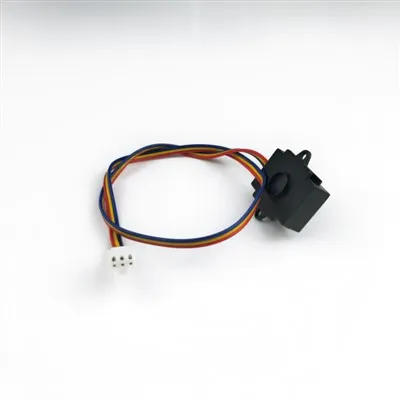
As a supplier of ultrasonic tank level sensors, I often receive inquiries from customers about the applicability of our sensors in various tank configurations. One common question is whether an ultrasonic tank level sensor can be used in tanks with a sloping bottom. In this blog post, I will delve into this topic, exploring the technical aspects, advantages, limitations, and practical considerations of using ultrasonic tank level sensors in sloped-bottom tanks. Ultrasonic Tank Level Sensor
Understanding Ultrasonic Tank Level Sensors
Before discussing the suitability of ultrasonic sensors for sloped-bottom tanks, it’s essential to understand how these sensors work. Ultrasonic tank level sensors operate on the principle of echolocation. They emit ultrasonic waves towards the surface of the liquid in the tank. When these waves hit the liquid surface, they are reflected back to the sensor. The sensor then measures the time it takes for the waves to travel to the liquid surface and back. Based on the speed of sound in air and the measured time, the sensor calculates the distance between the sensor and the liquid surface. This distance is then used to determine the level of the liquid in the tank.
Challenges of Using Ultrasonic Sensors in Sloped-Bottom Tanks
Tanks with sloping bottoms present unique challenges for ultrasonic level sensing. The primary issue is that the sloped surface can cause the ultrasonic waves to scatter in different directions. Unlike a flat-bottomed tank, where the waves are reflected directly back to the sensor, in a sloped-bottom tank, the reflected waves may be deflected away from the sensor. This can lead to inaccurate or inconsistent level measurements.
Another challenge is that the shape of the sloped bottom can create areas where the liquid level changes at a different rate compared to a flat-bottomed tank. For example, in a tank with a conical bottom, the liquid level may change more rapidly near the apex of the cone compared to the wider part of the tank. This non-uniform change in liquid level can make it difficult for the ultrasonic sensor to accurately measure the overall volume of liquid in the tank.
Solutions and Adaptations
Despite these challenges, there are several ways to use ultrasonic tank level sensors effectively in tanks with sloping bottoms. One approach is to install the sensor at an appropriate location. By positioning the sensor in a way that maximizes the direct reflection of the ultrasonic waves from the liquid surface, the accuracy of the measurements can be improved. For example, in a tank with a conical bottom, the sensor can be installed at the center of the tank, directly above the apex of the cone. This allows the waves to travel vertically down to the liquid surface and back, minimizing the scattering effect.
Another solution is to use advanced signal processing algorithms. These algorithms can analyze the received signals and filter out any noise or interference caused by the sloped bottom. They can also compensate for the non-uniform change in liquid level by taking into account the shape of the tank. For example, some sensors are equipped with built-in software that can calculate the volume of liquid in a tank with a known sloped-bottom profile based on the measured distance to the liquid surface.
Advantages of Using Ultrasonic Sensors in Sloped-Bottom Tanks
Despite the challenges, there are several advantages to using ultrasonic tank level sensors in tanks with sloping bottoms. One of the main advantages is non-contact measurement. Ultrasonic sensors do not come into direct contact with the liquid in the tank, which makes them suitable for use in applications where the liquid is corrosive, viscous, or contains solids. This non-contact nature also reduces the risk of contamination and damage to the sensor.
Another advantage is the ease of installation. Ultrasonic sensors are relatively easy to install compared to other types of level sensors. They can be mounted on the top of the tank without the need for any complex modifications to the tank structure. This makes them a cost-effective solution for monitoring the level of liquid in sloped-bottom tanks.
Practical Considerations
When considering using an ultrasonic tank level sensor in a tank with a sloping bottom, there are several practical considerations to keep in mind. First, it’s important to choose the right sensor for the application. Different sensors have different specifications, such as range, accuracy, and frequency. It’s important to select a sensor that is suitable for the size and shape of the tank, as well as the properties of the liquid being measured.
Second, proper calibration is essential. Calibration ensures that the sensor provides accurate and reliable measurements. In the case of sloped-bottom tanks, calibration may need to take into account the shape of the tank and the non-uniform change in liquid level. It’s recommended to follow the manufacturer’s instructions for calibration and to perform regular calibration checks to ensure the accuracy of the measurements.
Finally, environmental factors can also affect the performance of ultrasonic sensors. For example, temperature, humidity, and air pressure can all affect the speed of sound in air, which in turn can affect the accuracy of the level measurements. It’s important to consider these factors and to take appropriate measures to compensate for them, such as using temperature compensation algorithms.
Conclusion
In conclusion, while using an ultrasonic tank level sensor in a tank with a sloping bottom presents some challenges, it is possible to overcome these challenges with the right approach. By installing the sensor at an appropriate location, using advanced signal processing algorithms, and taking into account practical considerations such as sensor selection, calibration, and environmental factors, ultrasonic sensors can provide accurate and reliable level measurements in sloped-bottom tanks.
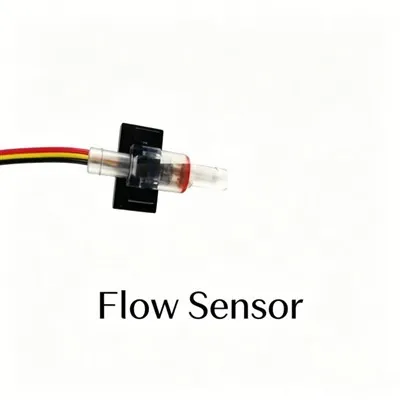
As a supplier of ultrasonic tank level sensors, we have extensive experience in providing solutions for a wide range of tank configurations, including those with sloping bottoms. Our sensors are designed to offer high accuracy, reliability, and ease of use, making them an ideal choice for monitoring the level of liquid in sloped-bottom tanks.
Ultrasonic Flow Sensor If you are interested in learning more about our ultrasonic tank level sensors or discussing your specific application requirements, please feel free to contact us. We would be happy to assist you in finding the right solution for your needs.
References
- "Ultrasonic Level Measurement: Principles, Applications, and Limitations" – A technical paper on ultrasonic level sensing technology.
- "Tank Level Measurement Handbook" – A comprehensive guide to different types of tank level sensors and their applications.
- Manufacturer’s documentation for our ultrasonic tank level sensors.
Shenzhen Fineherc Technology Co., Ltd.
As one of the most experienced ultrasonic tank level sensor suppliers in China, we’re featured by quality products and low price. Please feel free to buy discount ultrasonic tank level sensor made in China here from our factory. Welcome to view our website for more information.
Address: 5th Floor, Building D, No. 39, Keji East Road, Torch Development Zone, Zhongshan City,China
E-mail: fineherc@hotmail.com
WebSite: https://www.fineherc.com/
