So, you’re probably wondering, "How much does a Digital Sand Table cost?" Well, let me tell you, it’s not a one – size – fits – all answer. As a Digital Sand Table supplier, I’ve seen a wide range of prices depending on various factors. Digital Sand Table
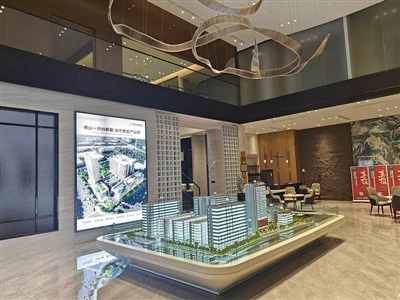
First off, the size of the Digital Sand Table plays a huge role. A small – scale table, say for a classroom or a small exhibition booth, is going to be a lot cheaper than a large one for a big museum or a corporate lobby. For a basic, compact table with a display area of around 1 square meter, you’re looking at a starting price of maybe $2,000 – $3,000. These smaller tables are great for those on a budget or with limited space. They can still offer a pretty cool digital experience, showing off simple 3D models or interactive maps.
But if you want a bigger table, like one that’s 5 square meters or more, the cost can skyrocket. You’re talking anywhere from $10,000 to $50,000 or even more. The reason for this is that larger tables require more powerful hardware to run the digital content smoothly. You need bigger screens, more processing power, and better – quality sensors. Plus, the materials used to build the frame and the tabletop itself need to be sturdier to support the larger size.
Another factor that affects the price is the level of interactivity. A basic Digital Sand Table might just show pre – programmed content. You turn it on, and it plays a loop of animations or displays static information. These are the cheapest options. You can get a simple non – interactive table for around $1,500 – $2,500.
However, if you want a highly interactive table, where users can touch, manipulate, and explore the digital content in real – time, the cost goes up. Interactive features like multi – touch capabilities, gesture recognition, and the ability to link with other devices add a lot of complexity to the system. For a table with advanced interactivity, you could pay $5,000 – $20,000, depending on the sophistication of the features.
The quality of the digital content also matters. If you’re just using some generic, pre – made 3D models and basic maps, it won’t cost you much. But if you want custom – made content, like detailed 3D reconstructions of historical sites or unique product visualizations, you have to pay extra for the design and development work. Content creation can range from a few hundred dollars for simple projects to tens of thousands of dollars for large – scale, complex ones.
The brand and the reputation of the supplier can also influence the price. Well – established suppliers with a track record of high – quality products and excellent customer service might charge more. But you’re also getting the peace of mind that comes with a reliable product. On the other hand, some new or lesser – known suppliers might offer lower prices, but you have to be careful about the quality and after – sales support.
Let’s talk about additional features. For example, if you want the table to be portable, so you can move it around easily for different events, that’s going to add to the cost. Portable tables need to be designed with lightweight materials and easy – to – assemble components. You might pay an extra 10% – 20% of the base price for a portable option.
Also, if you need the table to be integrated with other systems, like a museum’s ticketing system or a corporate’s presentation software, there’ll be additional development and integration costs. This can be anywhere from a few hundred to a few thousand dollars, depending on the complexity of the integration.
Now, let’s break down the cost components a bit more. The hardware is a major part of the price. This includes the display screen, which can be an LCD, LED, or projection – based screen. LCD screens are usually cheaper, but they have limitations in terms of brightness and viewing angles. LED screens are more expensive but offer better image quality and higher brightness. Projection – based systems can be a good middle – ground, but they also require a darker environment to work well. The processing unit is another important part of the hardware. A more powerful processor will cost more but will ensure smooth operation, especially for complex digital content.
The sensors are also crucial for an interactive table. Infrared sensors are a common choice because they’re relatively inexpensive and work well for basic touch and gesture recognition. However, for more precise and advanced interactions, you might need capacitive sensors, which are more expensive.
The software is the brain of the Digital Sand Table. Whether it’s an off – the – shelf software package or a custom – developed one, it impacts the price. Off – the – shelf software can be a cost – effective option if it meets your basic needs. Custom – developed software, on the other hand, is tailored to your specific requirements but comes with a higher price tag.
Installation and maintenance are also costs to consider. Installation might involve setting up the hardware, calibrating the sensors, and loading the software. Depending on the complexity of the table, installation can cost anywhere from a few hundred to a couple of thousand dollars. Maintenance, which includes regular software updates, hardware repairs, and technical support, is an ongoing cost. You can opt for a maintenance package from the supplier, which can range from a few hundred dollars per year for basic support to several thousand dollars for comprehensive 24/7 support.

So, as you can see, there’s no straightforward answer to how much a Digital Sand Table costs. It depends on so many factors like size, interactivity, content quality, additional features, and more. If you’re thinking about getting a Digital Sand Table for your business, school, museum, or any other place, I’d be more than happy to talk to you about your specific needs and give you a more accurate quote. Just reach out to me, and we can start a conversation about creating the perfect Digital Sand Table for you.
Industrial Model References
- Industry reports on digital display technologies
- Market research on interactive digital products
- Case studies of Digital Sand Table installations in different settings
Guangzhou Zonco Culture and Media Co., Ltd.
Guangzhou Zonco Culture and Media Co., Ltd. is one of the most reliable digital sand table manufacturers and suppliers in China, also supports customized service with low price. We warmly welcome you to wholesale cheap digital sand table from our factory. For quotation, contact us now.
Address: Room C371, 402, Building 6, No.3 Xintang Street, Tianhe District, Guangzhou
E-mail: 13123180052@163.com
WebSite: https://www.scalemodellab.com/
