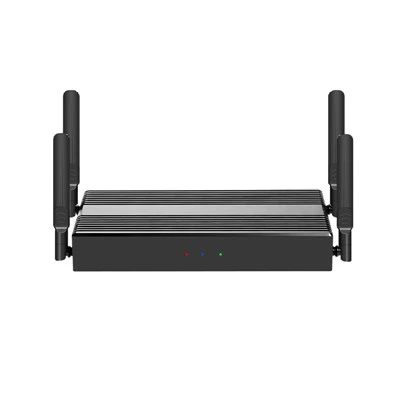
In the contemporary corporate landscape, video communication has emerged as a cornerstone of effective collaboration, spanning from routine meetings to large – scale conferences. At the heart of a robust corporate video communication system lies the video server, a technological linchpin that significantly impacts the quality, scalability, and overall functionality of these setups. As a trusted video server supplier, I’ve witnessed firsthand how these devices transform corporate communication. In this blog, I will delve into the multifaceted role of a video server in a corporate video communication system. Video Server
Centralized Content Management
One of the primary functions of a video server in a corporate video communication system is centralized content management. Corporations generate and utilize a vast amount of video content, including training materials, promotional videos, and recorded meetings. A video server acts as a digital repository, allowing companies to store all their video assets in one secure and accessible location.
This centralization simplifies content management in several ways. Firstly, it streamlines the process of uploading, organizing, and categorizing videos. Instead of having video files scattered across different hard drives or local servers, employees can simply upload new content to the video server, where it can be quickly tagged with relevant metadata for easy searching and retrieval.
Secondly, the video server provides a single source of truth for video content. This ensures that all employees have access to the most up – to – date version of videos. For example, if a training video is updated, the new version can be uploaded to the server, and anyone accessing the training material will automatically receive the latest content, eliminating the confusion that can arise from outdated or inconsistent information.
Video Streaming and Distribution
Another crucial role of a video server is to enable seamless video streaming and distribution. In a corporate setting, there are often multiple users who need to access video content simultaneously, whether they are in the same office or working remotely from different locations.
A high – quality video server is equipped with the necessary bandwidth and processing power to handle multiple concurrent streams without buffering or quality degradation. This is essential for real – time video communication, such as live meetings or webinars. For instance, during a company – wide town hall meeting, hundreds or even thousands of employees may need to watch the live stream. The video server must be able to distribute the video feed to all participants smoothly, ensuring that everyone can engage with the content regardless of their location.
Moreover, video servers support different streaming protocols, such as HTTP Live Streaming (HLS) and Real – Time Messaging Protocol (RTMP). This flexibility allows companies to integrate their video communication systems with various devices and platforms, including desktops, laptops, tablets, and smartphones. As a result, employees can access video content on the go, enhancing the overall accessibility and convenience of corporate video communication.
Security and Privacy
In the corporate world, security and privacy are of utmost importance, especially when it comes to video communication. A video server plays a vital role in safeguarding sensitive video content and ensuring the privacy of corporate communications.
Most modern video servers are equipped with advanced security features, such as access control, encryption, and intrusion detection. Access control mechanisms allow companies to define who can access specific video content. For example, a company may restrict access to certain training videos to employees in specific departments or with specific job roles. This helps prevent unauthorized access to sensitive information.
Encryption is another critical security measure. Video data transmitted between the server and the end – users is encrypted to protect it from interception and eavesdropping. This is particularly important for confidential meetings or discussions that involve sensitive business information.
Intrusion detection systems monitor the video server for any suspicious activity, such as unauthorized login attempts or abnormal network traffic. If an intrusion is detected, the system can automatically take appropriate action, such as blocking the IP address or sending an alert to the system administrator.
Scalability
As corporations grow and their video communication needs evolve, scalability becomes a key consideration. A video server provides the flexibility to scale up or down the system based on the company’s requirements.
In terms of storage, a video server can easily accommodate additional storage capacity as the volume of video content increases. This can be achieved through adding more hard drives or upgrading to a larger – scale storage system. For example, if a company starts producing more training videos or recording more meetings, the video server can be expanded to store the additional content without significant disruption to the existing system.
In terms of streaming capacity, a high – end video server can handle an increasing number of concurrent streams. As the company grows and more employees participate in video conferences or access video content, the server can be configured to support the higher demand. This scalability ensures that the corporate video communication system can keep pace with the company’s growth and changing needs.
Integration with Other Systems
A video server can integrate with other corporate systems, enhancing the overall efficiency and functionality of the video communication system. For example, it can be integrated with the corporate calendar system. This integration allows employees to schedule video meetings directly from their calendar applications. When a meeting is scheduled, the video server can automatically generate a unique meeting link and send it to all participants, simplifying the process of meeting setup and invitation.
It can also be integrated with the corporate communication platforms, such as instant messaging and email systems. This enables seamless communication between different channels. For instance, if a participant cannot attend a live video meeting, they can receive an email notification with a link to the recorded meeting, which is stored on the video server.
Quality of Service (QoS)
The quality of video communication is directly related to the Quality of Service (QoS) provided by the video server. A good video server is designed to prioritize video traffic and ensure that the video streams are delivered with high – quality audio and video.
It can adjust the video resolution and bitrate based on the available network bandwidth. For example, if the network connection is slow, the video server can reduce the video resolution to maintain a smooth stream without buffering. Conversely, if the network has sufficient bandwidth, it can increase the resolution to provide a more immersive viewing experience.
The video server also manages the buffering process to ensure that there are no sudden pauses or interruptions during playback. It pre – buffers the video data to anticipate the user’s viewing needs, providing a seamless playback experience even in less – than – ideal network conditions.
Conclusion

In conclusion, the role of a video server in a corporate video communication system is indispensable. It serves as a centralized content management hub, enables seamless video streaming and distribution, ensures security and privacy, provides scalability, integrates with other systems, and guarantees high – quality service. As a video server supplier, I understand the critical importance of these functions in a corporate environment.
Transmitter If your company is looking to enhance its video communication system, I invite you to reach out to us for a detailed discussion. Our team of experts can assess your specific needs and recommend the most suitable video server solutions for your organization. We are committed to providing high – quality products and excellent customer service to help you achieve seamless and effective video communication within your corporate network.
References
- Cisco. (2023). Video Conferencing Solutions for Business. Cisco White Paper.
- Juniper Networks. (2022). Network Security for Video Communication Systems. Juniper Networks Report.
- TechTarget. (2023). Understanding Video Servers in Enterprise Environments. TechTarget Article.
Shenzhen TranScreen Technology Co., Ltd.
As one of the most professional video server manufacturers and suppliers in China, we have world-leading production equipment and strong manufacturing capabilities. Please feel free to buy customized video server made in China here from our factory. Contact us for quotation.
Address: No. 168, Baoyuan Road, Baoan Dst., SZ, China
E-mail: inquiry@transcreen.com
WebSite: https://www.transcreen.com/
