Hey there, weather enthusiasts! I’m part of a weather monitoring system supplier team, and today I want to dig into one of our most frequently asked questions: How does a weather monitoring system measure snow depth? Weather Monitoring System

Let’s start by understanding why measuring snow depth is super important. Snow plays a huge role in our environment. It affects water supply, because when it melts, it fills rivers and lakes. It can also mess with transportation, causing road closures and accidents. And for farmers, it can either be a blessing, protecting crops from harsh cold, or a curse, if it’s too deep and causes damage.
Now, let’s get into the nitty – gritty of how we measure it. There are a few different methods, and our weather monitoring systems use a combination of them to get the most accurate readings.
Ultrasonic Sensors
One of the most common ways we measure snow depth is with ultrasonic sensors. These are pretty cool little devices. They work by sending out high – frequency sound waves towards the ground. When these sound waves hit the snow surface or the ground below, they bounce back to the sensor.
The sensor then calculates the time it takes for the sound waves to travel to the surface and back. Since we know the speed of sound in air (about 343 meters per second at room temperature), we can figure out the distance from the sensor to the surface.
For example, if the sound wave takes 0.01 seconds to travel to the surface and back, we can use the formula distance = speed × time. Since the sound wave travels to the surface and back, the one – way distance is half of the total distance traveled by the sound wave. So, the distance d = (343 m/s × 0.01 s) / 2 = 1.715 meters.
These sensors are great because they’re non – contact, which means they don’t have to touch the snow. This reduces the chances of the sensor getting damaged by the snow or ice. They’re also pretty accurate, and they can take measurements at regular intervals, giving us a real – time picture of how the snow depth is changing.
But like any technology, they have their limitations. Wind can mess with the sound waves, causing inaccurate readings. And if there’s a lot of snowfall, the sensor might get covered, which can also affect its performance. That’s why we usually pair ultrasonic sensors with other measurement methods.
Laser Sensors
Another method we use is laser sensors. Laser sensors work in a similar way to ultrasonic sensors, but instead of sound waves, they use laser light. The sensor emits a laser beam towards the snow surface, and when the light hits the surface, it reflects back to the sensor.
The sensor measures the time it takes for the laser light to travel to the surface and back. Since the speed of light is extremely fast (about 299,792,458 meters per second), we can calculate the distance to the snow surface very accurately.
Laser sensors are even more accurate than ultrasonic sensors, especially in windy conditions, because light is not affected by the wind as much as sound waves. They can also measure very small changes in snow depth, which is great for tracking the progress of a snowfall.
However, they’re also more expensive. And if there’s a lot of fog or heavy snow, the laser light can be scattered, making the readings less accurate.
Pressure Sensors
We also use pressure sensors to measure snow depth. These sensors are placed in the ground, and they measure the pressure exerted by the snow on the ground.
Snow has weight, and as more snow accumulates, the pressure on the ground increases. The pressure sensor records this change in pressure and converts it into a measurement of snow depth.
To make this conversion, we need to know the density of the snow. Snow density can vary depending on factors like temperature and the type of snowfall. Fresh, powdery snow is less dense than wet, heavy snow.
We usually calibrate the pressure sensors based on local snow conditions to get the most accurate readings. Pressure sensors are great because they can work even in harsh weather conditions and don’t rely on a clear line of sight like ultrasonic and laser sensors.
But they have their drawbacks too. If the ground freezes, it can affect the sensor’s ability to measure the pressure accurately. And if there’s a lot of wind, the snow can be blown around, causing uneven pressure on the sensor.
Manual Measurements
Even with all these high – tech sensors, manual measurements still play an important role. We often send out our field technicians to take measurements at specific locations.
They use a simple tool called a snow ruler. It’s just a long, graduated stick that they insert into the snow until it hits the ground. Then they read the measurement on the ruler.
Manual measurements are important because they can be used to calibrate our sensors. We can compare the readings from the sensors with the manual measurements to make sure the sensors are accurate. They’re also useful in areas where the sensors might not be working properly or in remote locations where it’s difficult to install sensors.
How Our Weather Monitoring Systems Combine These Methods
Our weather monitoring systems are designed to use a combination of these methods to get the most accurate snow depth measurements.
For example, we might have an ultrasonic sensor and a pressure sensor at the same location. The ultrasonic sensor can give us real – time, high – frequency measurements of the snow depth, while the pressure sensor can provide a more stable, long – term measurement.
We also use a data – processing algorithm in our systems. This algorithm takes the readings from all the sensors and combines them to get a single, accurate measurement of the snow depth. It can also detect if there’s a problem with one of the sensors, like if it’s giving inconsistent readings.
Why You Should Choose Our Weather Monitoring Systems
If you’re in the market for a weather monitoring system to measure snow depth, there are a few reasons why you should choose ours.
First of all, our systems are highly accurate. We use the latest sensor technology and advanced data – processing algorithms to make sure you get the most reliable snow depth measurements.
Second, our systems are easy to install and maintain. We provide detailed instructions and support to help you set up the system quickly and easily. And if you ever have any problems, our customer service team is always ready to help.
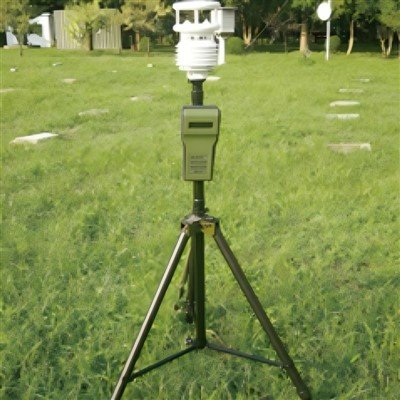
Third, our systems are customizable. We understand that different customers have different needs, so we can customize the system to fit your specific requirements. Whether you need a system for a small ski resort or a large agricultural area, we can design a solution that works for you.
Weather Station If you’re interested in learning more about our weather monitoring systems and how they can help you measure snow depth accurately, don’t hesitate to reach out. We’re always happy to have a chat and discuss your needs. You can contact us to start a conversation about how we can work together to meet your weather monitoring requirements.
References
- "Weather Monitoring and Forecasting Handbook", National Weather Service
- "Principles of Remote Sensing for Snow Depth Measurement", Journal of Hydrometeorology
- "Field Guide to Snow Measurement Techniques", American Meteorological Society
Tianjin Blooming Technology Ltd.
Address: Main Building, No. 10 Wuhua Road, Huayuan Industrial Zone, Binhai High-tech Zone, Tianjin, China
E-mail: sales@blooming-tech.com
WebSite: https://www.blooming-tech.net/
