When I started running my barrier fence supply company a few years back, I didn’t realize just how many people would come to me asking, “What’s the best fence for holding up snow?” Folks out in snowy regions—from ranchers in Wyoming to municipal crews in Maine—deal with massive snow drifts every winter. A flimsy fence doesn’t just collapse; it can block access to roads, bury livestock, or even turn into a dangerous projectile when wind gusts pick up. I’ve tested a ton of options over the years, talked to hundreds of installers and end users, and let me tell you, there’s no one-size-fits-all answer. But if you break down the science of snow load, it’s way simpler than you think. Barrier Fence

First, let’s get one thing straight: “snow load” isn’t just about how much snow falls. It’s a mix of depth, density, wind, and even how the snow settles. Light, fluffy dry snow (the kind that blows off mountain tops) can weigh as little as 5 pounds per cubic foot. Wet, heavy snow—think the slushy, slamming stuff that sticks to trees—can hit 30 pounds per cubic foot. That’s a huge difference. A fence that works for dry, low-density snow in Minnesota will crumble in the face of wet, heavy snow in Michigan. I’ve seen vinyl fences snap like twigs under 10 pounds of wet snow, and chain link stretch so bad it looked like a laundry line by spring.
So what actually holds up? Let’s start with the common options people ask about, and cut through the hype. Wood fences sound sturdy, but most residential wood fences—those 6-foot picket ones—aren’t designed for snow load. Even pressure-treated pine rots over time, especially when snow sits at the base, trapping moisture. I’ve had customers come back after a winter saying their wood fence split right along the bottom rails from frost heave and snow pressure. Unless you’re talking about a heavy-duty post-and-rail for a farm, wood is out for most high-snow areas. Vinyl fences? The lightweight kind sold at big box stores is garbage for snow. The thick, commercial-grade vinyl with steel cores? Now that’s a contender, but even then, size matters. A 4-foot vinyl fence is fine for small snow drifts, but a 8-foot one needs extra bracing I see a lot of installers skip.
Chain link is another big one. It’s flexible, so it can bend a little without breaking, right? Wait—no, actually, standard galvanized chain link has a hard time with heavy snow loads. The mesh can get pulled apart by wet snow, and the posts (usually 1.6-inch diameter) will bend if the drift is high. But heavy-duty chain link—2-inch gauge mesh, 3-inch diameter steel posts, with horizontal tension wires every 2 feet? That works. I’ve installed that along a stretch of highway in Montana that gets 12-foot drifts, and it’s still standing after 5 winters. But it’s not perfect—wind can blow snow right through the mesh, so if your goal is snow retention (not just keeping snow off a road), it might not be enough.
Now, the real star of the show, in my experience, is woven wire fence. Wait, not just any woven wire—high-tensile woven wire. Let’s talk numbers here: high-tensile steel is way stronger than regular steel because it’s drawn tighter during manufacturing, so it can stretch a little without breaking (elasticity, that’s the science term). The best high-tensile woven wire for snow load comes with a mesh size no bigger than 4×4 inches, and a wire thickness of at least 12.5 gauge. Why small mesh? Because it catches more snow, but distributes the weight evenly across the fence, instead of letting huge chunks pile up in gaps. I once had a customer in Idaho who put up a standard 5-foot 12.5 gauge woven wire, and it held a 10-foot drift all winter. The key here is the posts, too—you can’t skimp on those. For high snow load, you need 4-inch diameter steel posts, set 4 feet deep in the ground, and spaced no more than 8 feet apart. Add a top rail (another high-tensile wire) and you’ve got a fence that’s basically unbreakable under normal snow loads.
Wait, but what about the really extreme stuff? Like places that get 15 feet of snow a year, or coastal areas where salt makes metal corrode faster? That’s where I recommend panel-based barrier fences, specifically those made with heavy-duty aluminum or galvanized steel panels. I tested a few different panels a couple years ago, and the ones with a solid bottom panel (the first 2 feet) and a woven upper section are perfect. The solid bottom stops snow from drifting under the fence, and the woven upper lets wind pass through, which reduces the overall load on the fence—this is called “wind permeability,” and it’s a game-changer for snow fences. When wind blows snow, it creates drifts on the downwind side of an obstacle. If the fence lets 50-60% of wind through, the drifts are smaller and spread out, instead of piling up against the fence. I’ve seen these panels cut drift size by 70% compared to chain link, which means less weight on the fence itself.
A lot of folks ask me about portable snow fences, too—those are great for temporary use, like construction sites or areas where you don’t want a permanent fence. The best portable option for snow load is the high-tensile plastic mesh fence, the kind that’s UV-stabilized and has a reinforced edge. I’ve used these for our own job sites, and they hold up to snow loads up to 15 pounds per cubic foot. The trick here is staking them right—every 2 feet along the bottom, and every 4 feet along the sides, with T-posts. If you slack off on the stakes, wind will catch the fence and pull it over before the snow even piles up.
Now, let’s talk about mistakes I see all the time, because even the best fence will fail if installed wrong. First, not digging posts deep enough. I can’t tell you how many customers install posts 2 feet deep, and then wonder why they tilt after a few snow melts. In areas with frost heave, the ground moves, so posts need to be below the frost line—usually 3 to 4 feet deep, depending on where you are. Second, skipping bracing at the corners and gates. Corners are where snow pressure is highest, so a single post there will bend. I always add a brace with two posts and a diagonal wire at every corner, gate, and end of the fence. Third, not maintaining the fence between winters. That means clearing any brush that grows against it, straightening posts that leaned a little, and tightening loose wires. A little maintenance goes a long way in extending the life of the fence.
Wait, let’s get specific on load numbers to make this concrete. The International Building Code (IBC) recommends a minimum snow load of 30 pounds per square foot for most areas, but for high-risk regions, it can go up to 50 pounds per square foot. What does that mean for your fence? If you have a 8-foot tall fence, that’s 8 square feet per linear foot, so a 50 pounds per square foot load would be 400 pounds per linear foot. That’s a lot of weight, so you need a fence that’s rated for that. High-tensile woven wire is rated for up to 60 pounds per square foot, which covers almost every location in North America. The commercial-grade aluminum panels we carry are rated for even higher, around 75 pounds per square foot, which is perfect for mountainous areas with extreme snow.
Another thing to consider: what’s the fence for? Are you keeping snow off a road? A highway snow fence needs to be tall enough—usually 8 to 10 feet—because drifts can get that high. A fence for a ranch to keep snow from burying cattle might be shorter, but needs a solid bottom to stop drifts from going under. If it’s for a residential yard, you probably don’t need a 10-foot fence, but you still need something sturdier than the picket fence. A lot of people try to cut costs by buying the cheapest fence they can find, but in the long run, a good snow fence saves you money because you don’t have to replace it every few years. I’ve had customers who saved $500 upfront on a cheap vinyl fence, then spent $2,000 replacing it a year later when it collapsed under snow.
I should also mention corrosion. If you’re near the coast, or in an area where they salt roads in winter, regular steel fence will rust through in a couple years. Galvanized steel is coated with zinc, which prevents rust, and aluminum is even more corrosion-resistant. The woven wire we carry comes in galvanized, and the panels are either galvanized or powder-coated aluminum, so they hold up to salt and moisture way better than uncoated steel.
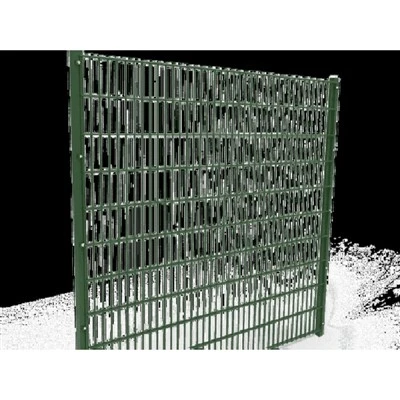
Let me wrap this up with a quick recap, because I know it’s a lot. The best barrier fence for snow load depends on a few things: how much snow you get, how heavy it is, and what you’re using the fence for. If you need a permanent solution for medium snow loads, go with high-tensile woven wire (12.5 gauge, 4×4 mesh) installed with 4-inch posts set 4 feet deep. If you’re in an area with extreme snow, or you need to reduce drift size, go with heavy-duty aluminum or galvanized panels, with a solid bottom and mesh upper. For temporary use, UV-stabilized high-tensile plastic mesh is your bet, as long as you stake it properly. And whatever you do, don’t cut corners on installation—deep posts, proper bracing, and regular maintenance will make your fence last decades.
Wire Strands Products If you’re in a snowy region and still not sure what’s right for your property, I can help. I’ve worked with ranchers, municipal road crews, construction companies, and homeowners, so I know the ins and outs of what works where. A lot of suppliers just sell you a fence, but I take the time to ask about your specific snow conditions, your needs, and even your budget, so you get something that doesn’t just hold up, but saves you money in the long run. Don’t wait until the first snowfall to realize your fence isn’t up to the job—reach out to my team, and we can walk through your options, answer any questions, and get you set up with the right barrier for the snow.
References
- American Society of Civil Engineers (ASCE). "Minimum Design Loads and Associated Criteria for Buildings and Other Structures (ASCE 7-22)." 2022.
- National Oceanic and Atmospheric Administration (NOAA). "Regional Snowfall and Snow Density Data." 2023.
- International Code Council (ICC). "Residential Code Requirements for Snow Load Barriers." 2021.
- Woven Wire Fence Manufacturers Institute (WWFMI). "Snow Load Performance Standards for Agricultural and Barrier Fences." 2022.
Firmstone (Tianjin) International Limited
Firmstone (Tianjin) International Limited is one of the most professional barrier fence manufacturers and suppliers in China, featured by quality products and good service. Please feel free to buy bulk advanced barrier fence made in China here from our factory. Welcome to contact us for quotation.
Address: 411, Prophet Valley, No.10, Meiyuan Road, Huayuan Industrial District, Xiqing District, Tianjin
E-mail: vivianjia@firmstonewire.com
WebSite: https://www.firmstonefactory.com/
