Hey everyone, High-elastic Waterproof & Sealant Emulsion
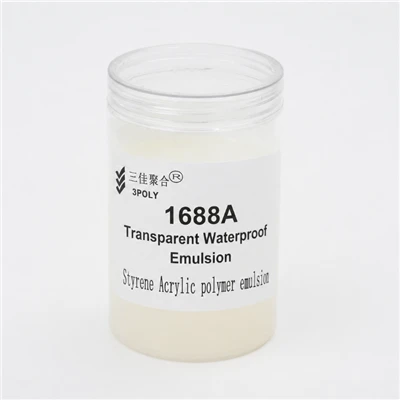
If you’ve been around the construction or renovation world lately, you’ve probably heard a million times that “high-elastic waterproof & sealant emulsion” is the go-to for sealing gaps around windows, fixing leaky roofs, or patching up cracks in concrete. But let’s be real—when I’m talking to homeowners, contractors, or even small business owners, the first question they always ask isn’t about durability or elasticity. It’s: “Is this stuff toxic?”
I get it. We’ve all seen those old sealants that smell so strong you have to leave the house for hours, or later found out they have chemicals that stick around in the air long after you’re done. As someone who’s been supplying these emulsions for over a decade, I’m not here to sell you a product that’s going to leave you worrying about your family’s health, your pets, or even the environment. So let’s break this down straight—no fancy jargon, no hidden agendas, just the facts about whether our high-elastic waterproof & sealant emulsion is non-toxic.
First, let’s clarify what we’re even talking about here. A high-elastic waterproof & sealant emulsion is a water-based mixture, right? Unlike solvent-based sealants that use harsh chemicals to stay flexible, we use water as the main carrier. That’s already a big difference when it comes to toxicity. But “water-based” alone doesn’t mean non-toxic. A lot of cheap brands cut corners with fillers or additives that can be harmful. We don’t do that. Let’s get into the specific ingredients that matter most here.
The core of our emulsion is acrylic polymer—specifically, 100% acrylic, no blends with cheaper vinyl or other low-grade polymers. Acrylic is a super common material in everything from kids’ toys to food packaging because it’s inert, meaning it doesn’t react with other substances and doesn’t leach harmful chemicals. Wait, but what about the processing? When we make our acrylic emulsion, we use polymerization processes that don’t leave behind residual monomers—those are the leftover small molecules that can sometimes be toxic if they escape. Independent third-party tests confirm that our product has less than 0.1% residual monomers, way below the industry safety limit set by organizations like the EPA and ASTM.
Next, the additives. This is where a lot of brands slip up. Fungicides, biocides, preservatives—you need these to stop mold from growing on the sealant after it’s applied, right? But a lot of these are the ones that can cause skin irritation or release volatile organic compounds (VOCs) once the sealant is dry. For our emulsion, we use only non-VOC, EPA-registered biocides that are designed specifically for water-based coatings. They’re effective at preventing mold and mildew without being harmful. Also, no phthalates—ever. Phthalates are those plasticizers that make sealants flexible, but they’ve been linked to health concerns in studies, especially when they’re in products that are used indoors. We don’t add any phthalates, period. That’s a non-negotiable for our team.
Let’s talk about the application process, too, because that’s a big part of “toxicity” people notice. When you first open a solvent-based sealant, it reeks because the solvent is evaporating, and those fumes can be dangerous if you inhale too much. Our high-elastic emulsion is low-VOC—like, less than 5 g/L, which is way below the 50 g/L threshold for “low-VOC” set by the EPA. When you apply it, you might barely smell anything at all. A lot of our customers even say they can paint over it an hour after applying, no need to ventilate the house for days. That’s not just convenient—it’s safe. No more leaving your kids or pets outside while you work on a basement bathroom or a window seal.
But let’s get real: “non-toxic” isn’t a one-size-fits-all term. Some people might be sensitive to even natural ingredients, so we always recommend wearing basic gloves (nitrile, not latex if you have allergies) while applying, just like you would with any cleaning product. But once the emulsion is fully cured—usually 24 to 48 hours, depending on temperature and humidity—it’s completely inert. You can touch it, clean it, even place food-safe items near it (we’ve had a few restaurant owners use it for sealing food prep areas, actually, and they’ve had zero issues).
Now, let’s address the elephant in the room: what about environmental toxicity? If you’re sealing a patio or a gutter that drains into a garden or a lake, you don’t want something that’s going to harm plants, fish, or other wildlife. Our emulsion is water-based, so if a small amount runs off while it’s still wet, it breaks down in water without releasing harmful chemicals. Once it’s cured, it’s waterproof but not leaching anything into the soil. We’ve had tests done by independent environmental labs that confirm it’s non-toxic to aquatic life—no dead fish, no wilting plants, which is a big deal for us because we’re not just in the business of selling products; we’re in the business of keeping spaces safe for people and the planet.
I know what some of you are thinking: “If it’s non-toxic, why is it still so effective?” That’s a fair question, because a lot of non-toxic sealants are flimsy and crack after a few years. Our high-elastic emulsion stays flexible because of that 100% acrylic polymer—its elasticity lets it move with the substrate (like wood, concrete, or metal) when it expands or contracts with temperature changes, so it doesn’t crack, leak, or peel. And the waterproofing? It forms a continuous, airtight membrane once cured, which blocks water from getting in. We’ve had customers who used it on a roof in Florida (where temperatures swing from hot to humid to rainy all year) that’s still holding strong after 7 years. So non-toxic doesn’t mean sacrificing performance—we prove that every single day.
Now, I’ve heard a lot of misinformation out there. Some people say “all emulsion sealants are toxic” because they’re oil-based? No, wait, emulsion just means it’s a mixture of two liquids that don’t mix normally, like oil and water. Water-based emulsions are way different from oil-based or solvent-based ones. Another myth: “Even if it’s non-toxic when wet, it’s toxic when dry.” No, as I said earlier, when it’s fully cured, it’s inert. The VOCs that were present when wet evaporate quickly, leaving behind the solid acrylic membrane, which is harmless.
As a supplier, we don’t just send out buckets and hope for the best. We provide safety data sheets (SDS) for every batch, so contractors and homeowners can see exactly what’s in it, and we’re happy to answer any questions about ingredients or testing. We also work with local health departments to make sure our products meet all the safety standards for residential and commercial use.
If you’re someone who’s been hesitant to use sealants because of toxicity concerns, I get it. I had a customer a few years back who tried a cheap solvent-based sealant for their nursery windows and ended up with headaches for weeks. They switched to our product, and now they tell me their kid’s bedroom smells fresh all the time, no fumes, no issues. That’s the kind of story that makes our job worth it—knowing we’re providing something that’s both safe and works.
So, to wrap this up: Is our high-elastic waterproof & sealant emulsion non-toxic? Yes, absolutely. We use non-VOC, non-phthalate ingredients, no harmful monomers, and test every batch to make sure it meets the highest safety standards. It’s safe for indoor use, safe for people with allergies, safe for the environment, and still delivers the durability and elasticity you need to keep spaces sealed and leak-free.

If you’re a contractor who needs a reliable, safe product for your next project, or a homeowner who’s tired of worrying about what’s in the sealant you’re using, we’d love to talk. We can provide samples, answer any more questions you have, and work with you to find the right quantity for your needs. Reach out to our team to connect and discuss your purchasing requirements.
Thickener Rheology Modifier References:
- American Society for Testing and Materials (ASTM) Standard D3363-21, Test Method for Film Hardness by Pencil Test.
- U.S. Environmental Protection Agency (EPA), Volatile Organic Compounds (VOCs) in Consumer Products: Basic Information.
- World Health Organization (WHO), Guidelines for Indoor Air Quality: Organic Pollutants.
- National Sanitation Foundation (NSF) International, Standard 61, Drinking Water System Components – Health Effects.
- European Chemicals Agency (ECHA), Registration, Evaluation, Authorization and Restriction of Chemicals (REACH) Regulation.
Shandong Sanjia Polymer Material Co., Ltd.
As one of the most experienced high-elastic waterproof & sealant emulsion manufacturers in China, we also support customized service. With a professional production team, we are able to meet the needs of the majority of our customers. Please feel free to buy bulk advanced high-elastic waterproof & sealant emulsion from our factory.
Address: No.15 Hengtong Road, Tancheng County, Linyi City, Shandong Province
E-mail: yudongxu1109@gmail.com
WebSite: https://www.3emulsion.com/
