Hey there, let’s cut to the chase for a second. If you’re a facilities manager, electrical contractor, or even just the person at your small business who’s been putting off that “building lightning check” because you’re not quite sure what tool to use—you’ve probably wondered this at some point: Can a lightning arrester tester (the exact device I sell for a living) actually work for the arresters on our buildings? Spoiler alert: Yes, it can, but only if you know what you’re doing with it, and there are a few key things most folks (including some who’ve been in the game for 20+ years) get wrong about using these tools for building systems. Lightning Arrester Tester
First, let’s demystify what we’re actually talking about here because a lot of people mix up “lightning arresters for power lines” and “lightning arresters for buildings.” The ones you see on a warehouse roof or a downtown office building are different—they’re smaller, rated for lower voltage, and their whole job is siphoning off that massive lightning surge that would otherwise blow out your HVAC controls, security cameras, or even the main electrical panel. The big, bulky ones on transmission lines? Those are for utility-grade, high-voltage lines—they’re way bigger, test totally differently, and that’s not what we’re dealing with here when we talk about building arresters.
Now, let’s get to the tester side. My team and I sell a range of these gadgets, and I can’t tell you how many times a new customer comes in saying, “Wait, can I use the line arrester tester I have for my building stuff?” Nope. That’s the first big mistake. Line testers are built for 69kV+ systems—they pump way more voltage than a building arrester, which is usually rated for 120V up to 35kV max (most commercial buildings are 480V or 15kV, residential is 120/240). Cranking too much voltage into a small building arrester doesn’t just give you a bad reading—it can damage the arrester permanently, which is the last thing you want when you need it to work during a storm.
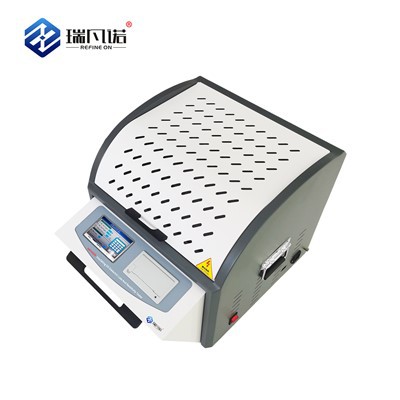
But here’s the good part: A building-specific lightning arrester tester—the kind we design—works perfectly for these roof-mounted units. Why? Because it’s calibrated exactly for the voltage range building arresters run on, and it tests the right metrics: leakage current, residual voltage, and the overall condition of the metal oxide varistor (MOV) inside the arrester. That MOV is the hero here—it’s what switches from being an insulator during normal power use to a conductor when a lightning surge hits, dumping the extra voltage to the ground. If the MOV is worn out, cracked, or contaminated (hello, years of roof dust, bird droppings, and rain), the arrester is useless—and a tester will catch that before a storm hits.
Let me share a real story because this isn’t just textbook stuff. Last month, I was on a call with a facilities manager at a 10-story office building in Chicago. They’d been using a random line arrester tester they borrowed from a contractor friend to test their roof arresters, and kept getting “false pass” readings. When they finally used one of our building-specific testers, we found two arresters on the north roof had leakage current 12x the safe threshold. They’d already had a near-miss a few weeks prior—their backup generator’s control board fried during a thunderstorm, and they thought it was just bad luck. Turns out it was a bad arrester they thought was working because of the wrong tool. That’s the kind of avoidable disaster that happens when you mix up tester types.
Now, let’s talk about when a lightning arrester tester might not be the right move for building arresters. If you have a brand-new building, say less than 5 years old, and it has factory-sealed arresters—don’t panic test them unless your local electrical code says so. Most codes only require testing every 3-5 years, and opening a factory-sealed unit without the right tools can mess with its seal, letting moisture in and actually shortening its life. Also, if your building is on an old, ungrounded electrical system—stop. Lightning arresters need a solid, low-resistance ground to work, and a tester will give you weird, unreliable readings if your ground is bad. Fix the ground first, then test the arresters.
Another thing most people sleep on: The difference between offline and online testing. A lightning arrester tester can do both, but for buildings, online testing is a game-changer. Offline testing means you have to shut off power to the arrester, which is a hassle for a hospital or a data center that can’t afford downtime. Our testers can connect to the arrester while the building is running, test its condition without cutting power, and flag issues in minutes. That’s the kind of convenience that makes facilities managers actually do the testing, instead of putting it off until it’s too late.
Wait, let’s clear up another common myth: You don’t need to be a licensed electrical engineer to use a building arrester tester, but you do need to be trained. I’ve seen contractors grab our tester, plug it in, and think a “green light” means it’s perfect—only to miss that the leakage current spiked during a simulated surge because the display was set to line arrester mode, not building mode. Our team offers free training to every customer, because a tool is only as good as the person using it. If you’re guessing at the readings, you’re wasting time and money.
Let’s get into the nitty-gritty of what a tester actually measures for building arresters, because this is where the science matters. For a 15kV building arrester, a good tester will check the DC leakage current (normal is under 50 microamps, if it’s over 100, it’s worn out) and the residual voltage at 10kA surge (that’s how much voltage the arrester lets through when hit with a real lightning bolt—if that’s too high, it’s not doing its job). Our testers also save test history, so you can track an arrester’s performance over time—say, if you test every year, you’ll see a gradual increase in leakage current, which means it’s time to replace it before it fails, instead of a sudden failure that takes out your whole system.
Now, let’s talk about when you wouldn’t use a lightning arrester tester for building arresters. If you have a really old building—like pre-1970—with ceramic arresters instead of MOV-based ones. Those are way more brittle, and a tester’s voltage pulse might crack them. In that case, you need a specialized tester for ceramic arresters, not the standard one for modern MOV units. Also, if you’re testing arresters on a solar farm? Wait, no—wait, actually, solar building arresters are a bit different, but most good building arresters testers work for those too, just make sure you select the PV mode on the tester, not the standard power mode. That’s a quick setting, but easy to miss.
I get it, as a supplier, I might sound like I’m pushing my product, but let’s be real—there are bad testers out there too. A lot of cheap, no-name testers on Amazon or Alibaba claim to work for building arresters, but they don’t have the calibration to measure the tiny, microamp-level leakage current that’s the key to a good building arrester. Those cheap ones will give you the same reading whether the arrester is good or bad, which is worse than not testing at all. When I talk to customers who bought those, I tell them: Spend a bit more on a calibrated tester, and you’ll actually catch issues, not waste time.
Let’s circle back to that Chicago office building story. They replaced the two bad arresters, tested again with our tool, and haven’t had an issue since. Last month, during a severe thunderstorm, their building’s electrical system took a direct surge—their cameras, HVAC, and elevator all stayed online, no fried boards, no downtime. That’s the payoff. A lightning arrester tester isn’t just a box you plug in—it’s a safety net for your building, your equipment, and even your people.
So to wrap this up: Yes, a properly selected, calibrated, and operated lightning arrester tester absolutely works for building lightning arresters. Just don’t grab the big one made for power lines, don’t test brand-new sealed arresters unless code requires it, fix your ground first, get trained on how to use the tool, and track test history over time.

If you’re in the market for a reliable building lightning arrester tester, or you just have questions about testing your building’s arresters (even if you bought one elsewhere), hit us up for a chat. We don’t do hard sells—we walk through what your building needs, answer all the dumb questions you’re too embarrassed to ask at the trade show, and make sure you get a tool that actually works for you.
Cable Tester References:
- IEEE Std C62.11-2012, IEEE Standard for Metal-Oxide Surge Arresters for AC Power Circuits (>1 kV)
- NFPA 70B-2023, Recommended Practice for Electrical Equipment Maintenance
- International Electrotechnical Commission (IEC) 60099-4:2014, Surge arresters – Part 4: Metal oxide surge arresters without gaps for a.c. systems
Refine On (Hebei) Electric Power Technology Co., Ltd.
Refine On (Hebei) Electric Power Technology Co., Ltd. is one of the most reliable lightning arrester tester manufacturers and suppliers in China, also supports customized service. Please feel free to wholesale advanced lightning arrester tester at competitive price from our factory. Contact us for quotation.
Address: Building 13, Liandong U Valley, No.64, Jing SAN South Street, Economic Development Zone, Mancheng District, Baoding City, China
E-mail: victor@transformer-test.com
WebSite: https://www.transformer-test.com/
