If you’ve ever stepped into a drainage project site, a plumbing supply warehouse, or a manufacturing plant that needs to move bulk fluids or protect underground wiring, you’ve probably encountered corrugated pipes. Their signature wavy walls make them flexible enough to bend around tree roots and uneven terrain, and durable enough to hold up under tons of soil and heavy machinery. But here’s the thing: not every corrugated pipe is the same. A pipe used for agricultural irrigation in a field has different needs than one used to carry chemical runoff at an industrial facility, or even one used to route power lines under a busy city street. That’s a question I get all the time in my work as a corrugated pipe machine supplier: Can a corrugated pipe machine be customized? The short answer is yes—far more than most people realize. But to get there, you have to dig beyond the basic “what’s a corrugated pipe machine?” explanation, and that’s what I want to walk through with you today. Corrugated Pipe Machine
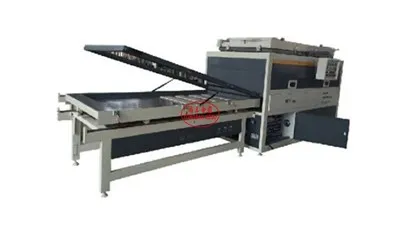
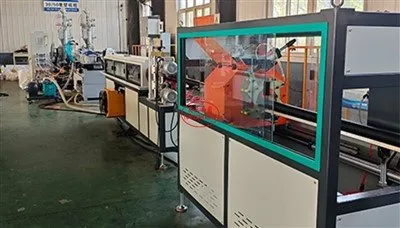
Let me start with a quick breakdown of what a standard corrugated pipe machine does, just to set the stage. At its core, it’s a line of connected machines that takes a raw material—most often plastic, like HDPE or PVC—and melts, shapes, corrugates, cools, and cuts the final pipe. The basic process is consistent: extrude molten plastic, pull it through a set of rotating corrugating dies that stamp the wavy pattern, cool the pipe to set that shape, and cut it to length. But the customization starts almost immediately, because no two clients’ needs are identical.
First, let’s talk about the material. A lot of people assume corrugated pipes are all plastic, but that’s not true. Some clients work with polypropylene (PP) for higher-temperature applications, others use flexible PVC for low-pressure plumbing, and a few even blend materials to get specific properties. For example, a farm in a cold climate might want a pipe made from a blend of HDPE and impact modifiers so it doesn’t crack when temperatures drop below freezing. A standard machine is built to handle one or two specific materials, but a custom machine can have adjustable extruder settings that let you switch between blends, adjust heating temperatures to match each material’s melting point, and even add in-line additives—like UV stabilizers for pipes that sit above ground, or antimicrobial agents for pipes that carry potable water. I worked with a municipal water district a couple of years ago that needed a machine that could process both standard HDPE and a food-grade HDPE, so we adjusted the extruder barrel’s liner material to be corrosion-resistant and added a remote monitoring system to track additive levels, so they never accidentally cross-contaminate their production.
Next up: pipe dimensions. This is where a lot of the most visible customization happens. Pipes can be as small as 2 inches in diameter for residential drainage, or as large as 12 feet for industrial culverts. A standard machine might only produce one or two sizes, but a custom line can have adjustable dies that let you swap out for different corrugation patterns and diameters without major downtime. For example, a construction company that works on both residential and commercial projects might need to switch between 4-inch residential sewer pipes and 48-inch commercial culverts in the same run. We built a machine for them a couple of years ago that has quick-change dies—no need to take apart the entire line, just lock in a new die set in under 20 minutes. We also added adjustable corrugation height and pitch, so they can make pipes with tight, small waves for flexible drainage or wider, deeper waves for extra structural support under heavy loads. The construction company told me this cut their production setup time by 70% compared to their old, non-customized machine, which meant they could take on smaller, last-minute jobs without the extra cost of resetting equipment.
Then there’s the final product’s performance, which is where a lot of the more technical customization comes in. A pipe’s job is to do specific things—resist collapse, handle pressure, be flexible enough for installation, or even self-drain properly. A standard machine can make a generic pipe that works for basic use, but a custom machine can be adjusted to hit exact performance specs. For example, if a client needs a pipe that can hold up to 10,000 pounds per square foot of soil load (common for culverts under highways), we can adjust the corrugation’s wall thickness and profile to add extra rigidity, or even add a reinforcing layer inside the pipe. For a client that makes pipes for underground electrical conduits, we can adjust the cooling process to make the pipe more rigid so it doesn’t crush during installation, while still keeping it flexible enough to bend around existing utility lines. We also did a project for a mining company that needed pipes that could handle acidic runoff—so we lined the extruder with a chemical-resistant material and adjusted the corrugation pattern to be smoother, so sludge and corrosive chemicals wouldn’t get stuck in the crevices. The standard machine they had before made pipes that only lasted 5 years in that environment; the custom line we built has produced pipes that have lasted over 12 years, with almost no maintenance.
Another big area of customization is automation and integration. A lot of small pipe manufacturers start out with basic, semi-automated machines, but as they grow, they need more efficient, connected systems. A standard machine might have a manual cut-off and basic speed control, but a custom line can integrate with other parts of the manufacturer’s operation. For example, if a client uses inventory management software, we can program the corrugated pipe machine to send real-time data on how much pipe it’s producing, what material it’s using, and when to reorder supplies. We’ve also built machines for clients that integrate with robotics: after the pipe is cut, the robot moves it to the packaging station, so no manual labor is needed, which cuts down on errors and makes the process safer. For a startup that wanted to run 24/7 with a small team, we added a predictive maintenance system that monitors the machine’s motors, dies, and extruder, and sends alerts if a part is wearing out before it fails. That client told us this cut their unplanned downtime by 90%, which let them take on more contracts without hiring extra staff.
I know what some of you are thinking: Customization sounds great, but is it worth the cost? That’s the question every client asks when they first bring up a custom machine. The short answer is that it depends on your long-term needs. A standard machine might cost less upfront, but if you’re producing multiple types of pipes, switching between materials, or needing to adjust specs for different projects, the downtime, waste, and extra labor from a one-size-fits-all machine will end up costing you way more over time. I’ve had clients who tried to save money with a standard machine, only to come back a year later asking for a custom line because they were losing money on every job. On the flip side, a custom machine doesn’t mean you have to spend six figures on something you don’t need. We work with every size of client, from small family-owned pipe manufacturers with one production line to large industrial firms with multiple plants. We start by asking what you need the machine to do, not what you think it should do, and build something that fits your specific workflow and budget.
That said, there are limits to customization—something I always make sure to be upfront about with every client. You can’t turn a corrugated pipe machine into a machine that makes plastic bottles, for example. The core process—extruding molten material and shaping it into a corrugated tube—has fixed parameters, so customization has to fit within those. But within that framework, there’s a huge amount of flexibility. I always tell clients: If you have a need, we can design a machine that meets it, as long as it’s aligned with the basic function of a corrugated pipe production line.
Let me give you an example of that flexibility. A few years ago, I worked with a company that made corrugated pipe for aquariums. Wait, aquariums? Yeah, they needed small, flexible pipes that could carry water between tanks, and the pipes had to be perfectly smooth on the inside, no sharp edges, and able to handle frequent sterilization. A standard corrugated pipe machine has a lot of crevices in the corrugations that are hard to clean, so we designed a custom machine that makes “smooth-wall corrugated” pipe—so it has the wavy, flexible structure for strength, but the inside is flat and smooth for water flow and easy cleaning. We also adjusted the extruder to use a medical-grade PVC, and added a special cooling process so the pipe didn’t have any residual odors that would hurt the aquarium fish. That client grew their business by 300% in three years, all because their custom pipe was unique in the market.
Another thing I always emphasize to clients is that customization doesn’t have to be a one-and-done deal. If your business grows, or your needs change, we can adjust the machine later. I’ve gone back to clients years after installing their custom line, added new dies, updated the automation software, or adjusted the heating settings to handle new materials. A good corrugated pipe machine is an investment that should grow with your business, not something that becomes obsolete in a few years.
So where do you start if you think a customized corrugated pipe machine is right for you? First, be honest about what you need. Don’t just say “I make pipes”—tell us what kind of pipes, what material, what sizes, what performance specs, and how you want to integrate it into your production. If you’re not sure, we can walk you through it. A lot of clients come to us with a vague idea, and we help them refine that into something that fits their budget and their long-term goals. The worst thing you can do is try to force a standard machine to do something it wasn’t designed for—you’ll end up with wasted material, lost time, and a product that doesn’t meet your clients’ needs.
At the end of the day, the corrugated pipe industry is all about solving specific problems. Whether you’re building a drainage system that lasts 50 years, a plumbing line that fits in a tight space, or a pipe that can handle harsh industrial conditions, one size doesn’t fit all. And if your production line isn’t built to meet your specific needs, neither is your final product. If you’re tired of a machine that slows you down, limits what you can make, or forces you to compromise on quality, it’s time to talk about customization. We work with clients around the world to design, build, and install corrugated pipe machines that fit their exact needs, no matter how big or small the request. For more information and to discuss your specific requirements, feel free to reach out to our team for a consultation.
WPC Door Machine References:
- American Society of Mechanical Engineers. (2021). Design and Performance Standards for Corrugated Plastic Pipe. ASME Press.
- Plastics Pipe Institute. (2022). Customization in Plastic Extrusion: Best Practices for Industrial Applications. PPI Technical Report Series.
- Corrugated Pipe Manufacturers Association. (2023). 2023 Industry Report: Customization Trends in Pipe Production Machinery. CPMA Publications.
- International Organization for Standardization. (2020). ISO 9001:2015 – Quality Management Systems for Extrusion Machinery Design and Manufacture. ISO Central Secretariat.
Qingdao Tongsanhegu Plastic Machinery Manufacturing Co., Ltd.
With abundant experience, we are one of the most reliable corrugated pipe machine manufacturers and suppliers in China. We warmly welcome you to buy durable corrugated pipe machine for sale here from our factory. Quality products and reasonable price are available.
Address: West of Xixinzhi Village, Sanlihe District Jiaozhou, Qingdao City, Shandong Province, China
E-mail: info@tongsanhegu.com
WebSite: https://www.tongsanhegumachine.com/
