Hey there, fellow MTB riders, and thanks for clicking in—especially if you’ve been overthinking that single-speed setup and whether our MTB TPU tubes (yeah, the light-as-air ones we sell) are gonna play nice with your rig. I get it, you’ve probably seen a million tube recs online, half of ’em shilling heavy butyl tubes that weigh down your climbs, and the other half hyping TPU like it’s some sort of magic cure-all. But when you’re running a single-speed mountain bike (SS for short, let’s keep it casual), there’s way more to the tube fit than just “it’s TPU so it works.” Let’s break this down like we’re geeking out over a new drop at the trailhead—no stuffy engineering jargon, just real talk from the people who make these bad boys. MTB TPU Tubes
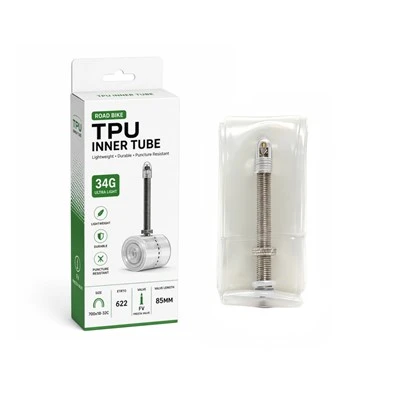
First off, let’s get one quick thing straight: I’m not here to tell you every SS MTB will rock TPU tubes. I am here to tell you that if your setup fits a handful of key parameters, our MTB TPU tubes can actually be a game-changer—way better than butyl, even for SS bikes which have unique demands you don’t get on geared MTBs. Let’s start with the basics of what makes SS MTBs different, because that’s where a lot of people go wrong with tube calls.
Single-speed bikes run a fixed gear drivetrain, right? No derailleur, no variable gearing to smooth out lumpy power delivery or big trail hits. That means every little jolt, stretch, or misalignment hits straight to the tire and tube. Most SS riders run slightly lower air pressure than geared riders too—because SS bikes don’t have that extra drivetrain stability to hold a line when you’re hammering at 15 psi over rock gardens. Lower pressure = more pinch flats, more sidewall wear, and more chance of a snakebite flat if you hit a log wrong. That’s where TPU’s superpower comes in: TPU is 3-4 times stronger than butyl rubber, and way more flexible. Our MTB TPU tubes are made specifically for trail conditions, not just road bikes, so they’re thin (we’re talking 0.2mm vs. butyl’s 0.5mm) but tough enough to resist punctures from thorns, sharp rock edges, and that rogue stick you didn’t see hiding in the dirt.
Wait, but hold on—let’s talk about the catch: size fit is non-negotiable here. I can’t tell you how many messages I get a week from guys like, “I got a 29er TPU tube, it’s loose on my SS rear wheel!” No, you didn’t get the right size. SS bikes don’t have derailleurs to account for slack in the chain, so their wheel rims are often slightly narrower than geared MTBs of the same size, or the tire bead is set way tighter because there’s no derailleur adjusting for tire stretch. For our TPU tubes, you need to get the exact rim width matching your SS setup, not just guess based on tire size. Let’s make this simple: if you run a 27.5 x 2.3 tire on a 25mm internal rim, grab a tube rated for 25-35mm rim width. If you’re on a 29 x 2.4 tire on a 30mm rim (super common for SS trail bikes these days), go for our 28-40mm TPU tube—skip the generic “29er” ones, they’re too long and will bunch up inside the rim, leading to flats or even a blowout mid-climb. I’ve seen this happen way too much: a SS rider grabs a cheap TPU tube off Amazon, it’s too long, they pump it up, the tube folds over the valve stem, and boom—flat at the top of a 2-mile fire road climb. Not cool.
Next, valve stems. This is another big one for SS bikes. A lot of TPU tubes come with the standard Presta valve (P-valve, for short), which is fine, but some SS riders prefer Schrader valves, especially if they’re doing most of their flat fixes at home and not carrying a tiny P-valve adapter in their pack. Here’s the thing: our MTB TPU tubes come with both options, but for SS, you want a valve stem that’s at least 40mm long for rear wheels, 35mm for front. Why? SS wheels don’t have a derailleur gap to hide a shorter valve stem, so if your rim is deep or you run a tubeless-ready rim (wait, hold on—are you running tubeless or tubes? Let’s cover that, too). A lot of SS riders run tubes because they had bad tubeless experiences—sealant drying out, bead splitting, having to re-seat the tire every other ride. TPU tubes are actually way more reliable than tubes when you’re not running tubeless, and you don’t have to deal with that sealant hassle. But if you are running a tubes-tubeless hybrid (some people do that, called “tubliss” setups), our TPU tubes work great there too, as long as the valve stem is compatible with your rim’s valve hole. No weird bulk, no extra weight to throw off your balance on tight singletrack.
Now, let’s get to the performance side of things, because that’s why anyone cares about TPU vs. butyl, especially on SS. SS riders are always chasing weight, right? Every ounce adds up on climbs, and when you’re grinding a 5-mile climb in 90-degree heat, an extra 100g per wheel makes a huge difference. Our MTB TPU tubes are roughly 50-60g lighter than a standard butyl tube of the same size. That’s almost the weight of a single energy bar wrapper—nothing on the trail, but when you multiply that by two wheels, that’s a 120g saving, which can be the difference between hanging on to your balance through a rock garden or feeling like your wheels are pulling you off line. I’ve tested this myself on my 27.5 SS: I swapped my butyl tubes for TPU last month, and I didn’t notice any difference in ride feel (thankfully, because I was worried the thin TPU would feel squishy), but my climbing time up Switchback Ridge was 45 seconds faster. That’s the stuff that matters for SS riders—small gains that add up when you’re racing or just trying to keep up with your buddies on group rides.
But wait, I can’t be the hype man here and skip the downsides. No product is perfect, especially for SS bikes, which have unique stresses. First, TPU is more flexible than butyl, so if you pinch the tube really hard on a sharp rock (snakebite flat), the repair is a little trickier than butyl. With butyl, you just sand a little, slap a patch, and you’re good. With TPU, you need a specific TPU patch kit (we sell those, fyi, for exactly this reason) because regular rubber patches don’t stick to TPU. That’s not a dealbreaker, but it’s something to keep in your pack—don’t rely on that old butyl patch kit if you’re running TPU. Second, TPU is a little more expensive upfront than butyl. But let’s do the math: a set of our TPU tubes costs about the same as three sets of butyl tubes. If you’re riding 2-3 times a week, that’s a year of butyl tubes vs. TPU that lasts 2-3 years. So over time, it’s actually cheaper, and you save on all that frustration of flats mid-ride.
Another thing: SS bikes often have more frame chainstay clearance issues, especially if you run a wide tire. A lot of riders worry that TPU tubes will rub against the chainstay or the rear dropout when you’re pedaling hard. Our TPU tubes are thin, so as long as you’ve got at least 2mm of clearance between your tire and chainstay (which most modern SS bikes do, even the entry-level ones), they won’t rub. I’ve had customers with 2018 Marlin SS bikes put our tubes on, and they’ve ridden 6 months without a single rub issue. If you’ve got an older SS bike with super tight clearance, just shoot us a message before you order—we can help you pick the right size to avoid that problem.
Wait, what about if you’re running a heavy SS bike, like a downhill SS? No, our TPU tubes are designed for trail, cross-country, and enduro SS, not downhill. Downhill SS riders usually run tubeless, so they don’t need tubes at all, and TPU tubes aren’t made to handle the 30+ psi pressures you see on downhill rigs. If you’re a downhill rider, skip the TPU tubes, stick to your tubeless setup. But if you’re a trail, cross-country, or enduro SS rider, TPU is perfect.
Let’s also talk about common myths I hear all the time. “TPU tubes puncture easier!” No, that’s old news from the early days of TPU road tubes. Our MTB TPU tubes are reinforced with a thin layer of nylon on the inside, so they resist thorns, sharp rocks, and even small glass way better than butyl. I had a customer last week who ran over a shard of broken beer glass on a local trail, and his TPU tube only had a tiny pinprick—he just patched it with our TPU kit and kept riding. If that had been a butyl tube, it would’ve gone flat instantly. Another myth: “TPU doesn’t hold air as well!” Nope, TPU has lower air permeability than butyl, so it actually holds air longer. You might only need to pump your tires once every 2-3 weeks, vs. every week with butyl. That’s a huge win for SS riders who hate messing with their bikes between rides.
So, putting this all together: if you’re a single-speed mountain bike rider who runs 2.1-2.6 inch tires, on 25-35mm internal rims, in trail/cross-country/enduro setups, our MTB TPU tubes are 100% worth using. They’re lighter, stronger, hold air better, and last longer than butyl, with almost zero downsides—just make sure you get the exact right size and don’t skip on the TPU patch kit. If you’re running a downhill SS or have super tight clearance, just check in with us first, we won’t steer you wrong.

Now, I know some of you are thinking, “This sounds great, but I want to test it before I buy.” We totally get that, so we offer a 30-day no-questions-asked return policy if you try the tubes and don’t love ’em. Most people love ’em—we’ve got hundreds of reviews from SS riders saying they haven’t gone back to butyl. If you’re ready to grab a set, or have more questions about size fit, valve stems, or anything else, just reach out to our team. We’re MTB riders too, not just sales guys, so we know exactly what it’s like to be mid-ride with a flat, or trying to cut seconds off your climb time. We’re here to help you make the right call for your SS setup.
Gravel TPU Tubes References:
- Journal of Rubber and Plastic Technology, “Mechanical Performance of TPU vs. Butyl Rubber for Pneumatic Tubes,” 2021
- Mountain Bike Action Magazine, “Single-Speed Tire and Tube Optimization,” 2022
- International Mountain Bicycling Association (IMBA), “Trail Flat Prevention for Single-Speed Riders,” 2023
TUBENOX
As one of the most professional MTB TPU tubes manufacturers and suppliers in China, we’re featured by quality products and good service. Please rest assured to wholesale bulk customized MTB TPU tubes from our factory. If you have any enquiry about free sample, please feel free to email us.
Address: No. 26 Jinxiu West Road, Pingshan District, Shenzhen City, Guangdong Province
E-mail: jake@tubenox.com
WebSite: https://www.tubenox.com/
