Hey there! I’m a supplier of textile testing instruments, and I often get asked this question: Can textile testing instruments be used for testing textile composites? Well, let’s dig into this topic and find out. Textile Testing Instruments
First off, let’s understand what textile composites are. Textile composites are materials made by combining textile fibers with a matrix material, like resin. These composites are super versatile and are used in a wide range of industries, from aerospace to automotive, and even in sports equipment. They offer a great balance of strength, light – weight, and flexibility.
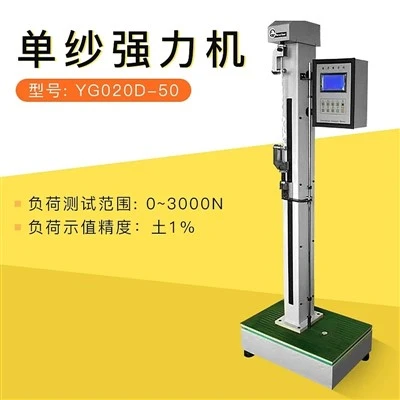
Now, let’s talk about textile testing instruments. I’ve been in this business for a while, and I know that these instruments are designed to measure various properties of textiles, such as tensile strength, tear resistance, colorfastness, and more. But can they be used for textile composites? The short answer is, in some cases, yes.
Tensile Testing
One of the most common tests in the textile industry is tensile testing. We use tensile testing instruments to measure the amount of force a textile can withstand before breaking. The same principle applies to textile composites. When we want to know how strong a textile composite is, we can use our regular tensile testing machines.
These machines work by clamping the sample at both ends and then slowly pulling it apart. They measure the force applied and the amount of elongation. However, there are some differences when testing textile composites. Textile composites are often stiffer and stronger than regular textiles, so we may need to adjust the test settings. For example, we might need to use a higher load capacity on the machine. Also, the way the composite fails can be different. A textile might simply tear, but a composite could delaminate or have fiber – matrix debonding. But overall, the basic concept of tensile testing with our instruments still holds.
Tear Testing
Tear testing is another important aspect. In traditional textiles, we use tear testing instruments to assess how well a fabric can resist tearing when a small cut or flaw is present. Textile composites are no different in the sense that we also want to know their tear resistance.
Our tear testing instruments work by creating a small cut in the sample and then measuring the force required to propagate the tear. When it comes to textile composites, the tear behavior can be more complex. The matrix material can influence how the tear spreads. For example, a well – bonded matrix might prevent the tear from spreading easily, while a poor – quality matrix could lead to rapid tear propagation. But we can still use our standard tear testing equipment, just like we do for regular textiles. We might need to be more careful with sample preparation, though, as the composites are often thicker and more rigid.
Abrasion Testing
Abrasion resistance is crucial, especially for textile composites used in applications where they will come into contact with rough surfaces. We have abrasion testing instruments that simulate the wear and tear a textile or composite might experience.
These instruments work by rubbing the sample against an abrasive surface for a set number of cycles and then measuring the amount of damage. Just like with other tests, while testing textile composites, we might need to make some adjustments. The abrasive material we use might need to be coarser or more durable to cause an observable amount of wear on the composite. Also, we have to consider the different layers and the matrix in the composite. The matrix might protect the fibers from abrasion to some extent, but it could also be the first thing to wear away, exposing the fibers.
Colorfastness Testing
Now, let’s touch on colorfastness testing. For regular textiles, we use instruments to check how well the color holds up under different conditions, like washing, light exposure, or rubbing. You might think that colorfastness testing isn’t really relevant for textile composites, but in some cases, it is.
There are textile composites that are used in outdoor applications where they are exposed to sunlight, rain, and other environmental factors. If these composites have a colored finish or coating, we need to ensure that the color doesn’t fade or bleed. Our colorfastness testing instruments can be used for this purpose. We can use the same light – fastness testers and wash – fastness testers that we use for regular textiles. The process is similar, but we might need to pay more attention to the surface of the composite. If the composite has a rough or textured surface, it could affect the way the color is tested.
Limitations
However, it’s not all smooth sailing. There are some limitations to using regular textile testing instruments for textile composites.
One major limitation is the complexity of the composite structure. Textile composites often have multiple layers, different fiber orientations, and a matrix material that can interact in complex ways. Our standard textile testing instruments might not be able to fully capture all these interactions. For example, some of the instruments are designed for flat, single – layer textiles, and they might not be suitable for testing three – dimensional textile composites.
Another limitation is the range of properties that need to be tested. Textile composites can have unique properties, such as high – temperature resistance, electrical conductivity, or chemical resistance. Our regular textile testing instruments might not be equipped to measure these specific properties. We might need to invest in more specialized equipment for these types of tests.
Customization and Adaptation
As a textile testing instrument supplier, I understand that we need to adapt to the changing needs of the industry. When it comes to testing textile composites, we can customize our instruments to better suit the job.
For example, we can modify the clamping mechanisms of our tensile testing machines to hold the rigid and thick samples of textile composites more securely. We can also upgrade the software of our instruments to handle the different types of data generated from testing composites. And for some of the specialized tests, like high – temperature testing, we can work with customers to develop new testing setups based on our existing instruments.
In conclusion, while textile testing instruments can be used for testing textile composites in many cases, there are some challenges and limitations. But with a bit of customization and adaptation, we can still get valuable information about the properties of textile composites using our equipment.
Blow Room Machine If you’re involved in the textile composite industry and are looking for reliable textile testing instruments, I’d love to have a chat with you. Whether you need to test the basic properties like tensile strength or something more specialized, we can work together to find the right solutions for your testing needs. Just reach out to me, and we can start discussing how our instruments can fit into your quality control processes.
References
- ASTM International. Standards related to textile and composite testing.
- ISO (International Organization for Standardization). Textile and composite test standards.
Shandong Hongye Machinery Co., Ltd.
Shandong Hongye Machinery Co., Ltd. is one of the most professional textile testing instruments manufacturers and suppliers in China, featured by quality products and low price. Please rest assured to buy advanced textile testing instruments in stock here and get quotation from our factory. Also, 1 year warranty is available.
Address: Room 1104, Building No. 2, Haier Yunjie, No. 99 Chongqing South Road, Qingdao, China
E-mail: sales@seavincn.com
WebSite: https://www.sdhymachinery.com/
