If you’ve ever wandered through a solar panel manufacturing plant, a semiconductor fabrication facility, or even a warehouse storing components for electric vehicles, you’ve likely encountered high-purity silicon. This is the stuff of science—99.9999% pure (or higher), refined to near-perfection to conduct electricity or capture sunlight exactly as engineers designed. But what happens to the silicon that falls short of that impossibly strict purity standard? That’s off-grade silicon, and as a supplier who’s worked with this material for over a decade, I can tell you it’s not just “bad silicon.” It’s a material with a surprisingly complex environmental footprint—one that’s often overlooked, even in industries focused on sustainability. Off-grade Silicon
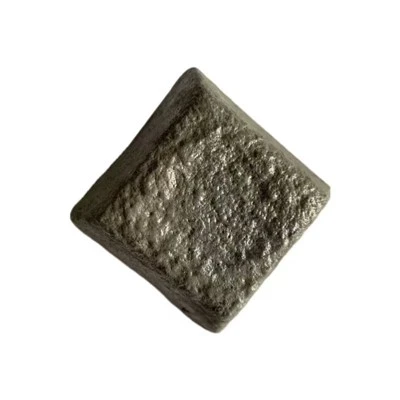
Let’s start by defining what off-grade silicon actually is. When silicon is produced from quartzite (the raw mineral) via the carbothermic reduction process, it first forms what’s called metallurgical-grade silicon (MG-Si), which is around 98-99% pure. For most high-tech applications—solar cells, microchips, battery anodes—manufacturers then refine MG-Si to electronic-grade silicon (EG-Si, 99.999999999% pure) or solar-grade silicon (SoG-Si, 99.9999% pure). Off-grade silicon is MG-Si that doesn’t meet those higher purity thresholds. The impurities are usually trace elements: iron, aluminum, calcium, phosphorus, or boron, present in concentrations too high for EG-Si or SoG-Si but too low to disqualify it from other uses. Some off-grade batches are also silicon scrap—trimmings from wafer manufacturing, casting residues, or damaged solar cells—that’s not pure enough for its original purpose but still mostly silicon.
At first glance, you might think this is a waste product, and historically, that’s exactly what many companies did with it. But here’s the thing: the environmental impacts of off-grade silicon aren’t just about what happens when you dispose of it. They start the moment it’s generated, stretch through how it’s stored, how it’s reused or recycled, and even how it’s eventually processed for other uses. As someone who sources, sorts, and repurposes off-grade silicon every day, I’ve seen these impacts firsthand—and I’ve also seen how they can be mitigated, if we stop writing off this material as “junk.”
The Hidden Impacts of Off-Grade Silicon Generation
The first environmental footprint of off-grade silicon is tied to how it’s created. When manufacturers refine MG-Si to higher purity, they’re essentially carving out tiny slivers of perfect silicon from a larger block, or etching away layers to get the exact composition they need. Those slivers and layers that have slightly too much phosphorus (a common impurity in quartzite) or boron (often added to dope silicon for electrical properties) are what end up as off-grade. Every time a company rejects a batch as off-grade, that means they’ve already invested energy and resources to get it that far—energy that translates to carbon emissions.
A 2022 study in the Journal of Cleaner Production found that refining 1 ton of MG-Si to SoG-Si generates roughly 0.25 tons of off-grade silicon, and the refining process alone accounts for 70% of the total carbon emissions associated with the final solar panel. That’s a big number. For context, a single 300-watt solar panel requires about 15 grams of SoG-Si, so generating 1 ton of off-grade from refining for 66,666 panels means those rejected slivers are responsible for the emissions that went into making 16,666 of those panels before they were even rejected.
Then there’s the energy part. Silicon refining uses a ton of electricity—around 110 kWh per kg for carbothermic reduction of quartzite to MG-Si, and up to 200 kWh per kg for refining MG-Si to SoG-Si. When that refinement process produces off-grade, that energy is effectively wasted on a material that can’t be used for its intended purpose. Multiply that by the global solar and semiconductor industries, which produce over 5 million tons of MG-Si annually, and you get a massive amount of embodied energy locked in off-grade silicon. If that energy isn’t leveraged, it’s a major environmental cost.
Storage and Contamination Risks: A Quiet Threat
Once off-grade silicon is generated, how you store it makes a huge difference to its environmental impact. Off-grade silicon is usually sold in bulk—stored in crates, drums, or even large piles in warehouses. But because it’s often a mix of fine particles and chunks, it can pose risks if not handled properly. The fine silicon dust is the biggest concern here.
Silicon dust is combustible, and when inhaled, it can cause silicosis—a serious lung disease. But the environmental risk isn’t just to workers. If stored outdoors without proper containment, wind can blow that dust into nearby soil, waterways, or even residential areas. Silicon itself isn’t toxic, but the impurities in off-grade silicon can be. For example, iron in high concentrations can leach into groundwater, altering its pH and harming aquatic life. A 2019 case study from the European Semiconductor Industry Association looked at a storage site in Germany where 10 tons of off-grade silicon had been left uncovered for 10 years. Rainwater runoff from the site had 3x the legal limit of iron and aluminum in nearby streams, killing off most macroinvertebrates and disrupting the local ecosystem.
Another storage issue is cross-contamination. Off-grade silicon is often sorted by impurity type—some batches are high in phosphorus, some high in calcium, some a mix. If you store a batch of high-phosphorus off-grade next to high-aluminum scrap, and a drum leaks, you can ruin both batches, making them unsellable and forcing them into landfill. Landfill is one of the worst fates for off-grade silicon, because when silicon sits in a landfill, it can react with water and air to form silane gas, a highly flammable substance that can accumulate in landfill sites and pose explosion risks. As the landfill decomposes, that silane can also escape into the atmosphere—though it’s not a greenhouse gas, it’s a major safety hazard, and one that’s completely avoidable with proper storage.
Reuse and Recycling: Turning Off-Grade into a Sustainability Solution
Here’s where my role as an off-grade silicon supplier comes in. For years, most off-grade silicon was either landfilled or sold for very low prices to be used in low-value applications, like steel production (as a deoxidizer) or aluminum casting (to improve strength). But those uses often had their own environmental costs—for example, adding off-grade silicon to steel can increase the amount of slag produced, a toxic byproduct that’s hard to dispose of.
Today, we’re finding better, higher-value uses for off-grade silicon that not only reduce its environmental impact but also create a circular economy for silicon. The fastest-growing use is in lithium-ion batteries. Battery anodes are traditionally made from graphite, but silicon has 10x the energy storage capacity of graphite. However, pure silicon expands by up to 300% when it’s charged and discharged, which damages the anode. Off-grade silicon, with its tiny impurity levels, has a slightly different crystal structure that reduces expansion, making it perfect for mixed silicon-graphite anodes.
A 2021 report from the International Energy Agency (IEA) found that using off-grade silicon in battery anodes can reduce the carbon footprint of an electric vehicle’s battery by up to 15%, because it avoids the energy-intensive process of refining silicon to battery-grade purity. What’s more, reusing off-grade silicon for batteries cuts down on the need for new MG-Si production, which is responsible for 2% of the world’s industrial carbon emissions. As someone who’s been supplying off-grade silicon to battery manufacturers for the past five years, I’ve seen this first-hand: a single battery plant can use 500 tons of off-grade silicon a year, keeping that material out of landfill and reducing their overall emissions at the same time.
Another growing use is in construction. Off-grade silicon is a key ingredient in high-performance concrete, where it acts as a pozzolan—a material that reacts with calcium hydroxide in cement to improve concrete’s strength and durability. Using off-grade silicon in concrete reduces the amount of cement needed, and cement production is responsible for 8% of global carbon emissions. A 2023 study from the University of California, Berkeley, found that replacing 10% of cement with off-grade silicon can reduce concrete’s carbon footprint by 12%, while also making it more resistant to cracking and weathering. That’s a win for the construction industry and the environment alike.
Of course, not all off-grade silicon is suitable for these high-value uses. Some batches have impurity levels that are too high for batteries or concrete, and those still need to be processed responsibly. For those, we work with partners who turn them into silicon-based fertilizers, where the impurities like iron and aluminum act as micronutrients for crops. This is a far better alternative to landfill, as it closes the loop on the material and keeps harmful impurities from leaching into the environment.
The Role of Suppliers in Reducing Off-Grade’s Environmental Footprint
As an off-grade silicon supplier, I think it’s our job to not just sell the material, but to help our customers minimize its environmental impact. That starts with quality control: we sort off-grade silicon by impurity type and concentration, so customers know exactly what they’re getting and can match it to the right application. For example, a battery manufacturer that needs low-phosphorus silicon doesn’t have to pay for high-purity refining, because we can supply them with off-grade silicon that’s already low in phosphorus.
We also work with our supplier partners (the semiconductor and solar manufacturers that generate the off-grade) to improve their production processes. A lot of off-grade is generated because of outdated refining equipment, or because manufacturers reject batches for minor impurities that could be adjusted with small process changes. Last year, we helped a solar plant in Southeast Asia adjust their refining temperature by just 5 degrees Celsius, which reduced their off-grade generation by 18%—saving them hundreds of tons of material from being wasted, and cutting their carbon emissions by an estimated 2,000 tons a year. That’s the kind of impact that’s easy to miss, but it’s the most important work we do.
What This Means for the Future of Silicon Sustainability
The global push for net-zero emissions has put a lot of focus on high-purity silicon, because it’s the backbone of renewable energy and electric vehicles. But we can’t ignore the waste from that production. Off-grade silicon is a perfect example of how “waste” is just a resource we haven’t figured out how to use yet. As the IEA pointed out in its 2022 Silicon Supply Chain Report, the world will need 10x more silicon by 2040 to meet renewable energy and EV targets, and leveraging off-grade silicon will be critical to keeping that supply chain sustainable.
Of course, there are still challenges. The market for off-grade silicon is less mature than the market for high-purity silicon, so there’s less standardization in terms of purity levels and testing. There’s also a lack of awareness among manufacturers about the potential uses for off-grade silicon—many still think it’s only good for steel production, not for batteries or concrete. That’s why we work so hard to educate our customers, showing them data on how off-grade silicon can reduce their costs and their emissions at the same time.
At the end of the day, the environmental impacts of off-grade silicon aren’t set in stone. They depend on how we generate it, store it, and reuse it. For too long, this material has been seen as an afterthought, a side product of the industries that drive our transition to clean energy. But as an off-grade silicon supplier, I know that’s changing. More and more companies are recognizing that off-grade isn’t waste—it’s a valuable resource that can help us build a more circular, sustainable economy.

If your company is looking to reduce its environmental footprint by leveraging this valuable material, or if you’re working in an industry that could benefit from high-quality, responsibly sourced off-grade silicon, we’d be happy to discuss how we can partner with you. Together, we can turn what was once a waste product into a key part of a more sustainable future for silicon.
References
High Carbon Silicon Journal of Cleaner Production, Volume 351, 2022, pp. 131528
European Semiconductor Industry Association, Storage and Handling of Semiconductor Waste Materials, 2019
International Energy Agency, Silicon Supply Chain for Clean Energy, 2021
University of California, Berkeley, Journal of Sustainable Construction Materials and Technologies, Volume 8, Issue 2, 2023
Anyang Baitengxin Metal Co., Ltd.
As one of the most professional off-grade silicon manufacturers in China, we have world-leading production equipment and strong manufacturing capabilities. Please feel free to buy high quality off-grade silicon for sale here from our factory. Good service and reasonable price are available.
Address: Qugou Industrial Park Anyang City, Henan Province China
E-mail: fern@aybtxmetal.com
WebSite: https://www.aybtx-metal.com/
