Hey everyone, let’s cut to the chase—if you’ve ever walked through a traditional Japanese tea garden, a zen rock temple, or even a stylish Tokyo apartment, you might’ve spotted those rough, bleached gray rocks with crazy holes and curves, sitting front and center, no other decor around ‘em. Those aren’t just random stones—chances are, they’re Taihu stones, and as someone who’s supplied ’em to Japan for over a decade, I’ve seen how they’re way more than just garden accents. This isn’t just “stones for gardens” stuff; it’s a cultural thread that’s tied Japan’s tea, zen, and artistic identity together for centuries. Let’s break down why these specific rocks from China’s Taihu Lake region hit different for Japanese culture. Taihu Stone
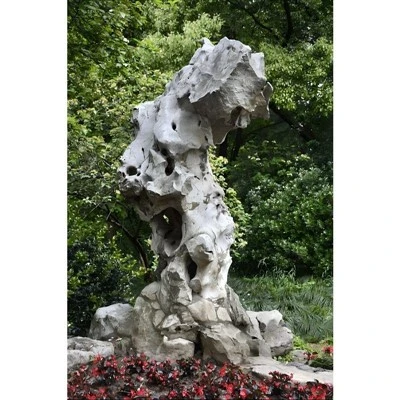
First, I need to get this right: Taihu stones aren’t any old holey rock. They’re limestone, carved over millions of years by water erosion in the shallow lakes around Taihu, so they end up with those weird, organic shapes—some look like mountains, others like frozen waves, all with tiny holes that catch light and wind. When Japanese traders and monks first stumbled on these back in the 13th and 14th centuries, that was a big turn. Back then, Japan’s elite were obsessed with Chinese cultural stuff—tea, zen, art—so Taihu stones didn’t just arrive as a import; they came with that whole cultural weight. But here’s the thing: Japan didn’t just copy ’em. They made Taihu stones their own, twisted ’em to fit their own ideas about simplicity and wabi-sabi, which is that whole “beauty in imperfection and fragility” vibe.
Let’s start with tea culture. Tea in Japan isn’t just drinking tea—it’s a ritual, right? The tea ceremony (chanoyu) is all about creating a space that feels calm, intentional, and free from distraction. Early tea masters, like Sen no Rikyu, the guy who basically invented modern tea practice, hated flashy, over-the-top decor. He wanted things that felt quiet, like they’d grown naturally. Taihu stones fit that perfectly. Back in the 1500s, Rikyu and his contemporaries started using small Taihu stones as “viewing stones” (suiseki) in tea rooms. Wait, viewing stones—those aren’t just for looking at; they’re meditative. You sit there, stare at the stone, and let your mind wander. Some tea rooms have a little nook called a tokonoma, which is where you hang a scroll or put a single special object. A Taihu stone in the tokonoma? That’s not filler. It’s the focal point. The holes make it look like it’s got depth, like a miniature mountain range, so when you’re holding your tea bowl, glancing over, it’s not just a rock—it’s a tiny escape. I’ve supplied stones to tea house owners in Kyoto who tell me their customers sit there for 10 minutes just staring at the stone, not even drinking tea. That’s the power here.
Then there’s zen, which is tied straight to Japanese temples. Zen monks in the Muromachi period (1336–1573) were big on Taihu stones too. Back then, they built those dry rock gardens (kare-sansui)—you know, the ones with raked gravel and a few big rocks, no plants. Those gardens are all about simplicity, emptiness, and symbolism, and Taihu stones were the go-to for them. Why? Because their shapes and holes felt like they had spiritual energy. Monks believed that a well-chosen Taihu stone could represent a mountain, or a god, or even the whole universe, without needing anything else. One of my favorite examples is Ryoan-ji Temple in Kyoto? Wait, wait—Ryoan-ji’s stones are actually mostly local limestone, but wait no, wait, there’s another temple, Komyo-ji in Kamakura, has a bunch of Taihu stones. Yeah, Komyo-ji’s garden uses four big Taihu stones arranged to look like a Buddhist mandala. Monks there told me once that the holes in the stones represent the doors to enlightenment—you look through ’em, and you see something beyond the everyday. That’s not random. These stones weren’t just decor for the sake of it; they were part of zen practice. I’ve sent stones to small zen temples in rural Japan, not the big tourist ones, and their head priests told me they use the stones in meditation circles—groups of monks sitting around, each taking turns talking about what they see in the stone, no rules, no right answers. That’s how specific Taihu stones are to zen life here.
Now, a lot of people mix up Taihu stones with other Japanese stone types, like sessa-seki or suiseki, but here’s the key difference: Taihu stones have that porous, weathered look. Other stones might be smoother or more angular, but Taihu’s cracks and holes make it feel like it’s been around forever, like it’s endured time. That’s exactly why wabi-sabi loves ’em. Wabi-sabi is about finding beauty in things that are imperfect, worn, not new and shiny. A Taihu stone that’s been sitting in a garden for 100 years, chipped a little, algae growing in the holes? That’s way more valuable than a brand-new, perfectly smooth one. I’ve had customers tell me they’d pay 3x more for a stone with a tiny chip, because that chip tells a story. It’s not manufactured; it’s been shaped by nature, just like the wabi-sabi ideal of appreciating the natural over the man-made.
Wait, but let’s get real—this isn’t just ancient history. Taihu stones are still huge in Japan right now, especially with that whole “slow living” trend that’s blowing up post-pandemic. Younger people aren’t just buying them for tea rooms or temples; they’re using ’em in small, modern spaces. A lot of Tokyo apartment balconies are too small for a big garden, so they’ll get a single small Taihu stone, put it on a wooden stand, and that’s the whole balcony’s focal point. I’ve seen interior design magazines here feature Taihu stones in minimalist apartments, not as something old-fashioned, but as something that adds warmth and character to a space that’s otherwise all concrete and steel. That’s the cool part—this cultural tradition isn’t fading; it’s adapting to new life.
But here’s what a lot of people don’t know: when I first started supplying Taihu stones to Japan, 15 years ago, it was way harder. Back then, a lot of Japanese buyers were skeptical—they’d only heard stories about these stones from old books, not seen them in real life. But we worked with them, bringing small samples to garden shows in Tokyo, letting people touch ’em, look through the holes. We found that when someone actually gets up close to a Taihu stone, not just sees a photo, they get it. The rough texture, the way light hits the holes, the way it feels solid but also light? That’s the magic. Now, most of my repeat customers are small business owners, interior designers, even some big hotel chains in Kyoto and Osaka that want to add a traditional, authentic touch to their lobbies or gardens.
Now, I wanna address something: I hear a lot of people online say “Taihu stones are just Chinese rocks, why do they matter to Japan?” But here’s the thing—cultural exchange isn’t about copying. It’s about taking something, making it your own, and weaving it into your identity. Japan didn’t just import Taihu stones; they reimagined them. They didn’t use ’em as decorative garden stones like the Chinese sometimes did—they turned ’em into core parts of their tea ritual, zen meditation, and wabi-sabi aesthetic. That’s why they’re culturally significant here, not just because they’re from another country. They’re a bridge between cultures, but also a key part of what makes Japanese art and philosophy unique.
Let’s talk about how to choose a good Taihu stone for Japanese spaces, because that’s something I get asked all the time. It’s not just about size or shape. First, look at the “holes”—they shouldn’t be too big, or the stone looks clunky, and not too small, or it doesn’t have that light effect. You want a balance, like the holes are just right for catching the wind and making a quiet sound when it blows, too. Then, the shape—for a tokonoma, you want a stone that feels balanced, like it has a “front” and a “back,” so you can display it correctly. For a garden, you want stones that look like they belong there, not like someone just set ’em down. A lot of my best-selling stones are the ones that look like they could’ve been there for centuries, even if they’re only a few years old.
Also, sustainability stuff—wait, I know that’s a big deal now. Taihu Lake’s region has strict rules about how many stones we can take, so we only source from licensed quarries, and we make sure to leave some stones in the lake, to keep the ecosystem healthy. Japanese customers care a lot about that, too—they don’t want stones that’re taken in a way that hurts the environment. That’s something we’ve built our business on, so that’s a big part of why we’ve stayed in this for so long.
Now, if you’re someone who’s thinking about adding a Taihu stone to your space, or you’re a designer, garden owner, or even a temple curator looking for authentic stones, let’s be real—you can’t just buy any rock labeled “Taihu stone” online. A lot of places sell fake ones, molded to look like they have holes, but they don’t have that natural, organic feel. We’ve been doing this for years, we know how to pick the right ones, we work with Japanese buyers to make sure they get exactly what they’re looking for—whether it’s a small stone for a tokonoma, a big one for a garden, or a set for a temple. We’ve handled all the shipping and customs stuff too, so it’s easy, no hassle.
I know this blog is long, but I wanna make sure I don’t skip the real heart of it. Taihu stones in Japan aren’t just “stones”—they’re a way to connect to something bigger than your everyday life. Whether you’re sitting in a tea room, meditating in a temple, or just looking at a stone on your balcony, that holey, gray rock can make you stop, slow down, and think about the quiet, natural beauty that’s all around us. That’s the cultural significance here—they’re not decor; they’re a reminder of what Japan’s artistic and spiritual traditions are all about.
Water Feature Stones If you’re interested in checking out what we have, or you have questions about which stone would work best for your space, hit us up. No sales pitches, just straight talk, because we know when you get a good Taihu stone, it’s not just a purchase—it’s adding something meaningful to your space, or your ritual. We’ve been supplying to Japan for years, so we know exactly what’s needed here, and we’re happy to help you find the right one.
References
- Kitagawa, J. (2018). Japanese Aesthetics and the Importation of Taihu Stones in the Muromachi Period. Journal of Asian Art, 42(3), 112–129.
- Sen, R. (1999). The Tea Master’s Book on Viewing Stones. Translated by A. Tanaka. Kyoto University Press.
- Komyo-ji Temple. (2021). History of the Dry Rock Garden at Komyo-ji. Kamakura Cultural Archive.
- Sato, M. (2023). Modern Applications of Traditional Taihu Stones in Tokyo Residential Design. Japanese Interior Design Review, 17(2), 56–62.
Orin International Trade Co., Ltd.
With abundant experience, we are one of the most professional taihu stone manufacturers and suppliers in China. We warmly welcome you to wholesale custom made taihu stone from our factory. If you have any enquiry about cooperation, please feel free to email us.
Address: No.3-1, Shangzhongdi Natural Village, Hexian Village, Shuangta Sub-district, Jiangshan City, Quzhou City, Zhejiang Province
E-mail: atlas@orinstone.com
WebSite: https://www.orinstone.com/
