If you’ve ever ordered a CNC turned shaft for a piece of agricultural equipment, a medical device component, or even a basic automotive part, you might have noticed the unlabeled container of liquid positioned near the turning lathe on the supplier’s shop floor. That liquid is coolant, and for anyone who’s worked with CNC turning of shafts long enough—like I have, running this small, family-owned CNC turned shafts supply business for the last 12 years—it’s not just a side-of-the-machine afterthought. It’s one of the most critical parts of the entire process, the difference between a shaft that holds tight tolerances and lasts 10,000 operating hours, and one that gets scrapped mid-production or fails within a week of being installed. Let me walk through exactly what coolant does in CNC turning of shafts, why it matters so much for shafts specifically, and how we choose and use it to keep our products reliable. CNC Turned Shafts
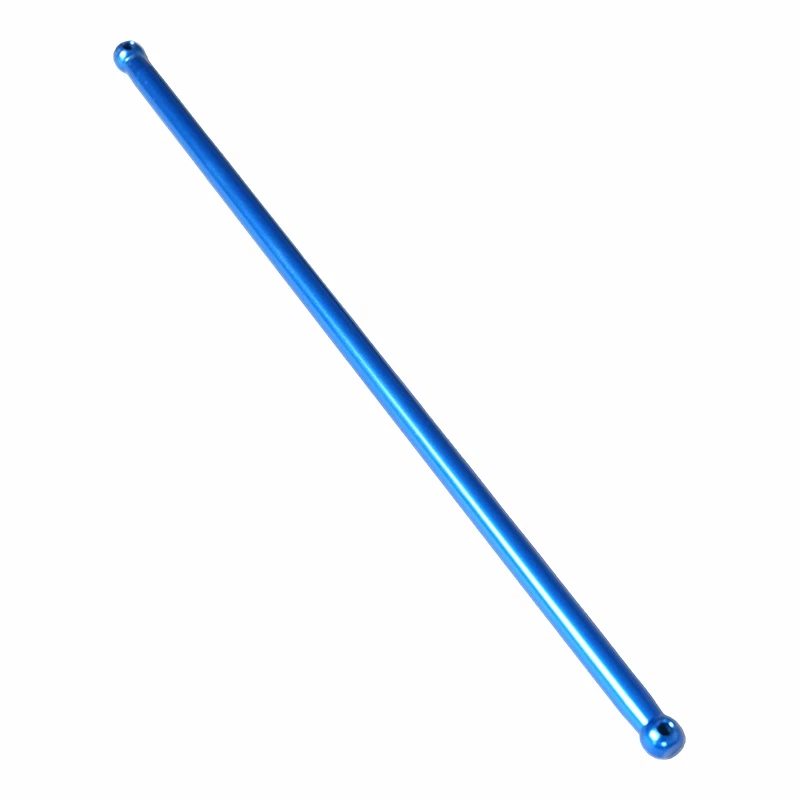
First, let’s ground this in what CNC turning of shafts actually is. Unlike milling, which cuts material from multiple sides of a part, turning uses a single, hard cutting tool that spins a cylindrical metal blank (like steel, aluminum, brass, or even titanium) at high speeds while feeding slowly into the blank to carve out the precise diameter, threads, grooves, or tapers that make a shaft functional. Shafts are almost always required to meet tight dimensional tolerances—often within thousandths of an inch—because even a tiny deviation can throw off the fit of a bearing, gear, or seal that mounts to it. They also need smooth, consistent surfaces, because rough spots cause friction, wear, and premature failure in whatever assembly they go into. That’s where coolant steps in, and its roles aren’t single-purpose; they layer together to support quality, speed, and cost-effectiveness on every shaft we produce.
The most obvious job of coolant is heat extraction, and it’s non-negotiable for turning operations. When that hard cutting tool presses into metal at 1,000+ surface feet per minute (SFPM), friction between the tool and the metal blank generates extreme heat—up to 1,000°C (1,832°F) at the cutting edge, according to standard machining research. Left unmanaged, that heat does two terrible things for shafts. First, it softens the cutting tool, making it dull far faster than it should, so we’d have to stop every 10 or 15 parts to change a tool, which delays orders and raises costs. Second, and more critical for the shaft itself, the heat transfers to the metal blank, causing it to expand. Even a tiny amount of thermal expansion on a long shaft—say, a 6-foot steel driveshaft—can throw off the diameter by more than the 0.001-inch tolerance we’re required to hit. I learned this the hard way early on, when we tried skipping coolant for a batch of 10-inch steel transmission shafts. By the time the lathe finished turning the fifth part, the temperature of the blank had risen 12 degrees Fahrenheit, expanding the end by 0.003 inches. We scrapped all five parts, lost material, wasted labor, and pushed our delivery date out by two days. That mistake taught me: for shafts, heat control isn’t just about efficiency—it’s about not throwing away $20 worth of steel and an hour of skilled work every time we run a batch.
But heat extraction alone isn’t enough. Coolant also lubricates the cutting zone, reducing friction between the tool’s edge, the metal chip that breaks off during turning, and the newly machined surface of the shaft. Think of it like the oil in your car’s engine, but for a high-stress cutting interface. Without that lubrication, the chip can weld itself to the cutting tool—a problem called “built-up edge” (BUE), which is extra common when turning softer metals like aluminum, which we use a lot for lightweight components. BUE leaves rough, uneven spots on the shaft’s surface, which as I mentioned earlier, cause wear when the shaft spins in a bearing. Worse, the constant friction from a dry cut accelerates tool wear so much that we’d burn through a tool in an hour instead of four. Last year, we tested a batch of brass shafts for a plumbing component supplier, and when we switched from our standard semi-synthetic coolant to a generic, low-lubricity fluid, we ended up with 12% of parts having BUE-related surface defects. The next week, we swapped back and scrap rate dropped to 0.8%. That’s the kind of impact lubrication has on the parts we ship.
Another role that’s super important for shafts specifically is chip evacuation. When you turn a shaft, the cutting tool shaves a continuous, long chip off the blank—especially when turning long, thin shafts, which are common for things like hydraulic rods or motor armatures. If that chip sticks to the newly machined surface of the shaft or gets tangled around the tool, it can scratch or gouge the smooth, precision surface we spent time cutting. Coolant flushes that chip away, using the flow of fluid to carry the broken chips out of the cutting zone before they can cause damage. For thin shafts, which are prone to vibration during turning, chip evacuation also reduces the risk of the chip bouncing between the tool and the shaft, which would create dimensional errors. We once had a customer send back a batch of ¼-inch diameter aluminum motor shafts with small scratch marks along their length, and when we investigated, we found our coolant flow had been restricted by a clogged nozzle. Once we cleaned the nozzle and ensured consistent chip evacuation, those scratches disappeared entirely. That’s a small detail, but it’s the difference between a shaft that passes inspection and one that gets returned.
We also can’t overlook corrosion protection, especially for shafts made of steel, which is our most common material. When we finish turning a shaft, the metal is hot, and left sitting on the shop floor, it can attract moisture or residual machining fluids that cause surface rust. Even a tiny spot of rust on a shaft can make it impossible to mount a bearing or gear, since it creates an uneven, rough surface. Our coolant has rust inhibitors built in, which leave a thin, protective layer on the shaft’s surface after machining, preventing corrosion while the part waits for shipping. This is especially important for long-term storage, or for parts that sit in transit for a few days. A few years ago, we had a batch of 200 steel agricultural shafts that were delayed in shipping during a rainy week. Since we used our standard coolant with rust inhibitors, none of them showed any rust when they arrived at the customer’s facility. If we’d used a coolant without that protective layer, we would have had to inspect every shaft for rust, and probably ship a batch of replacement parts at our own cost—something we can’t afford to do, since our customers rely on us for just-in-time delivery.
Now, all that said, not all coolants are created equal, and choosing the right one for CNC turned shafts is a bit of a balancing act. A lot of shop owners just grab the cheapest coolant they can find, but that’s a mistake for shaft production. For example, when turning aluminum shafts, we avoid coolants with high levels of certain chemicals that can cause discoloration, which would make the part look unprofessional for customers that need a polished finish. For stainless steel shafts, which are used in medical and food processing equipment, we use a food-grade semi-synthetic coolant that’s non-toxic and resistant to bacteria growth, since stainless steel can be prone to staining if bacteria builds up in the coolant. We also monitor our coolant concentration every day, because if it’s too diluted, it loses its lubrication and corrosion protection properties; if it’s too concentrated, it can leave a sticky residue on the shaft that’s hard to clean before coating or assembly.
Another thing we’ve learned over the years is that coolant maintenance matters just as much as choosing the right type. Bacteria and mold grow in coolant reservoirs over time, which can create a foul smell, reduce coolant effectiveness, and even cause skin irritation for our machinists. We test our coolant weekly for pH levels and bacterial count, and we change the system every three months, plus filter the coolant daily to remove metal shavings that can scratch shafts. Last year, we skipped a week of coolant testing, and we found a small amount of bacterial growth in our reservoir, which caused a batch of 50 aluminum shafts to have minor surface discoloration. We were able to fix it by running the shafts through a cleaning bath, but it added extra work and delayed the shipment. That’s why we have a system in place for our team to check coolant levels and quality every morning—it’s a small task, but it prevents a lot of big problems.
At the end of the day, when a customer orders CNC turned shafts, they care about three things: tight tolerances, a smooth surface, and a part that will last. Coolant isn’t something they’ll see on their parts list, but it’s the backbone of every shaft we produce. It’s what keeps the dimension accurate by controlling heat, what keeps the surface smooth by lubricating the cut and removing chips, and what protects the part from corrosion before it even leaves our shop. For us, it’s not just a liquid we pump through the lathes—it’s a critical part of our process, one that’s worth investing time, money, and attention to detail on, because our customers rely on us to deliver parts they can trust.
If you’re in the market for CNC turned shafts—whether for automotive, agricultural, medical, or any other application—and you’re looking for a supplier that pays attention to the small, critical details that make a difference in part quality, we’d be happy to discuss your requirements. We work with businesses of all sizes, from small local fabricators to large multinational companies, and we prioritize precision, reliability, and on-time delivery on every order. To connect with our team to talk about your shaft needs, please reach out to us directly for more information.
CNC Turning References
- Smid, P. (2008). CNC Turning: Handbook for Programmers and Operators. Industrial Press, Inc.
- DeGarmo, E. P., Black, J. T., & Kohser, R. A. (2020). Materials and Processes in Manufacturing (13th ed.). John Wiley & Sons.
- Machining Data Handbook (7th ed.). (2016). Society of Manufacturing Engineers.
- Astakhov, V. P. (2006). Metal Cutting Theory and Practice. CRC Press.
Huizhou Quanyi Precision Hardware Products Co., Ltd.
Address: Building A10, 7th Floor, Zhongchuangyingke 5G Industrial Park, Zhonghan Industrial Park, Tonghu Town, Huizhou City
E-mail: info@qycncturning.com
WebSite: https://www.qycncturning.com/
