What’s the Starting Torque of an AC Servo Motor, Anyway? – A Supplier’s No-BS Breakdown AC Servo Motor
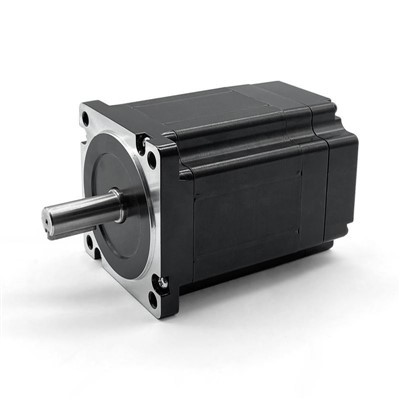
If you’ve ever shopped for AC servo motors for industrial machines, robotics, or even medical devices, you’ve probably seen “starting torque” thrown around in spec sheets. It’s one of those terms that sounds super technical, like something only engineers with slide rules would argue about – but once you dig into it, it’s actually one of the most important specs you’ll ever look at for your application. I’ve been supplying AC servo motors for over 10 years now, and I can’t tell you how many times a customer will come to me saying, “My motor won’t turn on startup” or “It stalls every time I load a part” – and nine times out of 10, the issue isn’t the motor size, it’s the starting torque. Let’s break this down like we’re chatting over a coffee, no jargon overload, and explain exactly what starting torque is, why it matters, and how to get the right one for your project.
First, let’s get the super basic definition out of the way, in plain English. Torque is just rotational force, right? Like when you twist a doorknob, that’s torque. Starting torque (sometimes called stall torque, which is the exact peak torque a motor can deliver when it’s not turning at all – that’s the starting part) is the maximum amount of twist an AC servo motor can generate the second it powers on, before it starts spinning. A lot of people mix this up with rated torque, which is the steady, constant torque a motor can keep putting out for long periods of time without overheating. Those are two totally different numbers, and using them interchangeably is how you end up with a motor that works fine when it’s already spinning, but dies the second you try to get it moving.
Wait, let’s clarify that with a real example from my business. Last year, a customer who builds packaging lines reached out panicking. They had a small conveyor belt that needed to lift 5kg boxes onto a pallet, and they’d bought a standard induction motor (not a servo, but they didn’t know the difference) rated for 10N·m of torque. But every time they turned the belt on, the motor would hum loudly and not move – it was overloading and tripping the circuit breaker. They called me thinking they needed a bigger motor, but when I checked their specs, their startup torque requirement was actually around 8N·m, while that induction motor only had a starting torque of 3N·m. The induction motor’s rated torque was high, but its starting torque was garbage because it’s designed for constant, steady-speed operation, not precision startup with a load. That’s where AC servo motors shine – their starting torque is almost always equal to or higher than their rated torque, because they’re built to handle sudden loads, which is exactly what most automated applications deal with.
Now, how do AC servo motors actually produce that starting torque? Let’s keep this simple, no deep physics unless you want it. Unlike old DC motors that used brushes to create magnetic fields, AC servo motors use permanent magnets and variable-frequency drives (VFDs, sometimes called amplifiers) to control the current to the stator windings. When you power on an AC servo, the VFD sends a precise burst of current to create a rotating magnetic field that interacts with the permanent magnets on the motor’s rotor. The second that field locks onto the rotor, that’s the starting torque – it’s instantaneous, because there’s no lag from brushes or a need to build up speed to generate force. Induction motors, by contrast, need to build up current in the rotor to create torque, which takes time – that’s why their starting torque is lower. That lag is fine for a fan, but terrible for a robotic arm that needs to pick up a part and move it 10cm in 0.5 seconds.
Here’s another key point: AC servo motors can hold that starting torque indefinitely, as long as you don’t exceed their temperature limits. If you ever see a spec sheet that says “stall torque” with a note like “not continuous,” that’s not a true servo motor – that’s probably a stepped or open-loop motor, which we don’t carry at our company. All our AC servo motors have rated starting torque that’s designed for both startup and momentary loads, which is critical for things like machine tools that cut metal, where you need to apply full force the second the tool touches the workpiece.
Now, why is starting torque such a big deal for your application, specifically? Let’s run through the most common scenarios our customers ask about:
Robotics: If you’re building a robotic arm that lifts a 2kg gripper with a 1kg part on it, the startup torque has to account for the full weight of the arm, the inertia of the moving parts, and any friction in the joints. If your starting torque is too low, the arm will jerk, stall, or even drop the part – which is a safety hazard for medical robots or factory automation lines. Last quarter, we sold a set of 200W AC servo motors to a medical device manufacturer that builds small surgical robots; they needed precise, consistent starting torque to move tiny instruments without vibrating, and our motors checked out at 0.6N·m starting torque, which was exactly what their design required.
Packaging & Conveying: Like that earlier customer, packaging lines have to stop and start constantly, picking up heavy boxes or crates on startup. If your motor can’t generate enough starting torque, you get bottlenecks, downtime, and damaged products. Our standard 400W AC servo motors have a starting torque of 1.27N·m, which works for most mid-sized conveyor lines, but we also have higher-torque models for heavy-duty palletizing lines that need 5N·m+ of starting torque.
CNC Machining: When a CNC tool touches a piece of metal, that’s a sudden, huge load – the motor has to apply full torque instantly to keep the tool from stalling or skipping. AC servo motors’ high starting torque is exactly why they’re the go-to for CNC machines, way better than old DC motors or even induction motors. I once had a CNC shop owner tell me he switched from induction motors to our AC servos and cut his stalling incidents by 90% – that’s the difference between good starting torque and bad.
Wait, but here’s a myth I hear all the time: “Higher starting torque is always better.” No, that’s not true. If you oversize your motor for starting torque, you’re wasting money on energy and space, which adds up over time. For example, a customer building a small pick-and-place robot came to me wanting a 1kW motor because he thought higher torque = better, but his actual startup requirement was only 0.3N·m. A 200W motor with 0.5N·m starting torque would have done the job perfectly, and he would have saved $1,200 on initial cost plus $300 a year in electricity. The key is to calculate your exact required starting torque, not just grab a big number.
How do you calculate the starting torque you need? I don’t expect you to pull out a textbook, and most suppliers will help you with this, but let’s give you the quick, dirty way. The formula boils down to torque needed to overcome friction plus torque needed to accelerate your load. For rotational loads (like a motor shaft turning a gear), that’s: Starting Torque = (J * α) + T_friction, where J is the inertia of your load, α is your desired angular acceleration (how fast you want the motor to spin up), and T_friction is the torque lost to bearings, gears, etc. If you’re dealing with linear loads (like a conveyor belt moving a box), you can convert linear force to torque: Torque = (Force * Radius) / Efficiency of your gear system.
Most good AC servo motor suppliers (read: us) will walk you through this calculation for free, no sales pitch attached. We’ve got a team of application engineers who spend all day helping customers match the right motor to their exact startup needs, so you don’t have to guess. I’ve seen way too many customers buy motors online just based on power ratings, and then end up with something that doesn’t work – that’s why we prioritize starting torque specs on our product pages, not just raw wattage.
Another thing that affects starting torque: the VFD (or servo drive) you pair with your motor. A cheap, off-the-shelf VFD might not send enough current to the motor’s stator when it starts up, so even if your motor has a spec of 2N·m starting torque, you might only get 1N·m in practice. That’s why we only sell matched sets of AC servo motors and drives – they’re calibrated to work together, so you get exactly the starting torque listed in the spec sheet, no surprises. I can’t tell you how many times a customer bought a cheap motor from a random seller and a cheap VFD off Amazon, and came to us saying “your motor’s torque is higher, why isn’t it working?” 9 times out of 10, the drive was underpowered or not calibrated for the motor.
What about common mistakes people make when choosing starting torque? Let’s list the top three, since I see them every week:
-
Mixing up starting torque and rated torque: Like that packaging line customer, someone will look at the rated torque of a motor (which is what it does when it’s already spinning steady) and assume that’s the startup torque. Big mistake – AC servos are the only motors where these numbers are almost the same, but even then, always check the “stall torque” number, which is the starting torque. Induction motors have starting torque that’s 50-70% of their rated torque, so if a motor has 10N·m rated, it only has 5-7N·m starting – that’s why it stalls on startup.
-
Forgetting inertia: Your load’s inertia is way more important than its weight when it comes to starting torque. If you have a heavy part that’s spinning on a shaft, the inertia is based on how fast you want to spin it, not just how much it weighs. For example, a 5kg plate spinning at 1000 RPM has way more inertia than a 10kg plate spinning at 100 RPM, so you need more starting torque for the faster spin. That’s why we always ask customers about their desired speed and acceleration, not just the weight of their load.
-
Ignoring environmental factors: If your motor is going to be in a cold warehouse, high-temperature factory, or dusty outdoor environment, that affects starting torque. Cold makes motor magnets stronger, so torque goes up a little, but heat can make magnets weaker, so torque can drop by 10-15% if it’s too hot. That means if your application is in a 50°C factory, you need to oversize your starting torque by 10% to compensate for that drop. We have motors rated for extreme temps and dusty environments, so just tell our team where your motor will be used, and we’ll adjust the spec accordingly.
Let’s circle back to my role as an AC servo motor supplier, because that’s who I am – not a textbook author, not a random engineer, but someone who’s dealt with thousands of customers and their motor headaches. We don’t just sell motors; we solve problems. When a customer calls us saying “my motor stalls on startup,” we don’t just point to the spec sheet and say “that’s not our problem.” We ask them to tell us about their application: what are they moving, how fast, what’s the load, what’s the environment, and then we walk them through whether their starting torque is too low, their drive is wrong, or they just need a motor sized for their needs.
Last month, we had a small business owner who builds custom display stands for trade shows. He was using a stepper motor that would jitter on startup, and his stands would tip over when he loaded a screen. We recommended a 100W AC servo motor with 0.32N·m starting torque, paired with a matched drive. He installed it, and now his stands start smoothly, no jitter, and he can load the full screen without any issues. He sent me a video of it at a trade show, and it’s one of my favorite stories – because it’s a small customer, not a big corporation, that just needed the right starting torque.
If you’re in the market for an AC servo motor, whether it’s for robotics, packaging, CNC, medical devices, or any other application where startup performance matters, don’t get stuck on power ratings or brand names. Ask about the starting torque (stall torque) spec, calculate your exact required torque, and make sure you’re pairing the motor with a matched drive if you want consistent performance. If you’re not sure where to start, or you need help calculating your required starting torque, our team is here to help. We don’t do hard sells, we don’t have fancy marketing that hides the specs, and we’ve been around long enough to know that the best motor is the one that works for your specific application, not the most expensive or the biggest.

So to wrap this up: Starting torque is the maximum rotational force an AC servo motor generates the second it powers on, before it starts spinning. It’s critical for applications where you need to get a load moving quickly and reliably, unlike induction motors which have lower starting torque and lag. Always distinguish starting torque from rated torque, calculate your exact requirements, account for inertia and environmental factors, and make sure you pair your motor with a matched servo drive. If you have questions about choosing the right AC servo motor for your project, we’re here to help you find the perfect fit for your needs.
Switched Reluctance Motor References
- AC Servo Motor Fundamentals, Motion Control Association, 2021
- Torque Basics for Industrial Automation, IEEE Industry Applications Magazine, 2019
- Servo Motor Selection Guide: Starting Torque Calculations, Automation Direct Technical Documentation, 2022
Zibo Auric Mechanical and Electrical Technology Co., Ltd.
As one of the leading ac servo motor manufacturers and suppliers in China, we warmly welcome you to buy advanced ac servo motor for sale here from our factory. All customized motors are with high quality and competitive price.
Address: B419, High-tech Entrepreneurship Park, High-tech Zone, Zibo City
E-mail: cui@auricmotor.com
WebSite: https://www.auricmotor.com/
