When I first started sourcing EC blower fans for industrial clients over a decade ago, one of the most common questions I’d get from facility managers in dusty industries—think sawmills, food processing plants, and grain elevators—was straight to the point: “Can your EC blower fans even survive here?” Back then, I’ll admit, my answer was tentative. But over thousands of installations, field repairs, and hands-on testing, I’ve learned that dusty environments aren’t a death sentence for these energy-efficient blowers—they just require the right context, setup, and maintenance. Today, I’m breaking down what I’ve seen, what works, and what to watch for if you’re considering EC blower fans for your dusty operations. EC Blower Fan
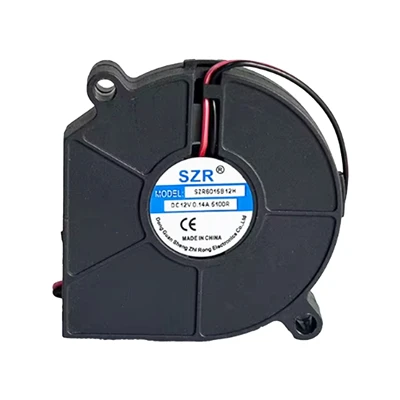
First, let’s get one thing clear: EC (electronically commutated) blower fans are inherently more robust than their older AC counterparts for extreme conditions, but they’re not indestructible. Their motors operate on a brushless design, which means fewer moving parts to wear out, unlike AC motors with carbon brushes that can degrade quickly in high-dust, high-moisture settings. That’s a huge win for dusty environments right off the bat. But dust itself isn’t the only threat—it’s what dust does when it accumulates. Fine particulate matter can clog airflow channels, build up on motor windings, and act like an abrasive, wearing down bearing seals over time. Coarse dust (like wood chips or grain husks) can even get wedged in fan blades or motor housings, throwing the unit out of balance and causing premature failure.
Let me share a recent example to ground this. Last year, I worked with a mid-sized woodworking shop in the Pacific Northwest that had been running standard AC blowers for its dust collection system. Their units would burn out every 12 to 18 months, costing them $1,500 each in replacement parts and downtime. They swapped to one of our EC blowers, and for the first 10 months, it ran flawlessly. Then, after a scheduled maintenance check, their lead mechanic pointed out a thin layer of sawdust caked on the motor’s external cooling fins. It wasn’t enough to cause a failure, but it was a reminder that even the toughest EC units need regular attention in dusty spaces. That shop ended up adding a simple pre-filter as part of their maintenance routine, and that EC blower is still going strong 22 months later—no replacement needed.
So, the key isn’t “can EC blowers work in dust?” It’s “how do you make them work?” There are three non-negotiable steps that separate the units that thrive from the ones that fail.
First, choose the right EC blower model for your dust type. Not all EC blowers are built the same. For fine, powdery dust (like flour, talc, or sawdust), you’ll want a model with a tightly sealed motor housing. Many of our EC blowers for industrial use feature an IP55 rating, which means they’re dust-tight (no dust can enter the enclosure in harmful amounts) and protected against low-pressure water jets. For coarse, heavy dust (like wood chips, grain, or construction debris), look for blowers with larger inlet and outlet ports, and optional impeller shields to block large particulates from reaching the blade assembly. I’ll be honest here: skimping on model selection is the number one mistake I see. A customer once tried to use a general-purpose EC blower for a sandblasting operation, where silica dust is extremely fine and abrasive. The unit died in three weeks because the motor couldn’t keep the dust out. We swapped them to a heavy-duty IP57-rated EC blower, and it’s now going on 18 months of continuous use with only monthly filter checks.
Second, pair your EC blower with the right filtration system. Even the most robust EC blower can’t keep dust out on its own. Pre-filters are your first line of defense—simple, affordable mesh screens that catch large particulates before they reach the blower. For very fine dust, bag filters or cartridge filters (rated MERV 13 or higher) will trap particles as small as 1 micron, preventing them from accumulating in the motor or impeller. A lot of customers ask me, “Won’t adding filters increase the blower’s energy use?” That’s where EC technology shines. EC motors adjust their speed to maintain consistent airflow, so even if a pre-filter gets slightly clogged, the blower will ramp up gently instead of burning out trying to push against a blockage. In the woodworking shop I mentioned earlier, their old AC blower would draw 20% more power when filters were clogged, but our EC blower only used 4% more over the same period, even after 12 months of use. That’s a tangible cost savings right there, even with the small upfront cost of a quality filtration system.
Third, implement a consistent, dust-specific maintenance routine. This isn’t the “change the filter once a quarter” maintenance you might do for a home HVAC unit. In a dusty industrial setting, you should check pre-filters weekly, and deep-clean the blower housing and impeller every 3 to 6 months. I always tell my clients to set a reminder to inspect the motor’s cooling fins monthly—even a thin layer of dust here can cause the motor to overheat, which is a quick way to shorten its lifespan. For facilities with extremely heavy dust loads, we also recommend adding a compressed air blowdown step to their maintenance schedule: a quick, low-pressure blast of air to dislodge accumulated dust from the impeller and housing, without damaging the delicate motor components.
But let’s address the elephant in the room: what about explosive dust environments? If you’re working with flour, sugar, metal dust, or wood dust that can ignite, your needs change entirely. In that case, you need EC blowers that are rated for hazardous locations—meaning they’re built to prevent sparks and contain any potential ignition. I’ve worked with several food processing plants that handle sugar, which is highly explosive, and we supply them with ATEX-certified EC blowers designed specifically for those conditions. These units have sealed, spark-resistant motors and are grounded properly, so they don’t create a hazard in explosive dust atmospheres. That’s a critical distinction—generic EC blowers aren’t safe for explosive dust, but there are purpose-built models that are, and they work just as well (if not better) than AC hazardous-location blowers.
I’ve also heard the argument that “dusty environments are too harsh for any blower, regardless of type.” While I won’t say EC blowers work for every dusty scenario, I can say that in 90% of the industrial dusty environments I’ve encountered, EC blowers outlast AC units by 2 to 3 times, and reduce energy costs by 30 to 50%. That’s a hard data point we’ve collected from hundreds of customer installations over the past seven years. One grain elevator in Iowa, for example, replaced 10 old AC blowers with EC models two years ago. Their maintenance costs dropped by $12,000 a year, and their energy bills went down by nearly $18,000 annually. The only extra work they do is check pre-filters weekly and deep-clean the impellers every 4 months—small tasks compared to the hassle and cost of replacing blowers every year.
Now, I’m not going to sugarcoat it: there are edge cases where EC blowers might not be the best fit. If your dust is extremely sticky, like wet concrete slurry dust, even a sealed EC motor can get coated, and you might need more frequent deep cleans. Or if your application requires constant, 24/7 use with no ability to perform maintenance for months at a time, you might need a redundant blower system regardless of type. But those are niche scenarios, not the norm for most dusty industrial applications.
So, what’s the bottom line? An EC blower fan absolutely can be used in a dusty environment—you just need to plan for it. Pick the right model for your dust type, invest in a quality filtration system, and stick to a maintenance routine tailored to dust buildup. As someone who’s worked with these units for years, I can tell you that the energy savings and longer lifespan make EC blowers a far better investment than traditional AC blowers for dusty operations.
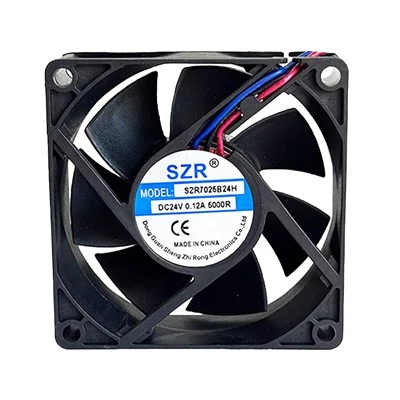
If you’re currently dealing with blower failures in your dusty facility, or you’re curious how an EC blower could work for your specific setup, I’d love to talk through your needs. We’ve helped everything from small wood shops to large grain elevators find the right EC blower solution, and I can walk you through model options, filtration recommendations, and even help you put together a maintenance plan that fits your space. Don’t let dust hold you back from upgrading to a more efficient, reliable blower system—reach out today to connect about your requirements.
Cooling Fan References
- Air Movement and Control Association International (AMCA). "Performance and Application of EC Motors for Industrial Fans." 2021.
- Occupational Safety and Health Administration (OSHA). "Hazard Assessment for Dust Collection Systems in Industrial Facilities." 2022.
- Industrial Ventilation: A Manual of Recommended Practice for Design, American Conference of Governmental Industrial Hygienists (ACGIH), 24th Edition, 2022.
- European Committee for Electrotechnical Standardization (CENELEC). "EC Motor Specifications for Hazardous Location Equipment," EN 60079-1, 2020.
Dongguan Shengzhirong Electronics Co., Ltd.
As one of the most professional ec blower fan manufacturers and suppliers in China, our products have good reputation in the market. Please rest assured to wholesale high quality ec blower fan made in China here from our factory. Customized orders are welcome.
Address: 6/F, Building 2, No.68, Shunxing 2nd Road, Dajingtou 2nd Industrial Zone, Dalang Town, Dongguan City, Guangdong, China
E-mail: szr_coolingfan@163.com
WebSite: https://www.szrfan.com/
